TRACKING FOR MAX RESULTS

Using a tracking device to measure exercise intensity is a great way to improve results – as well as ensure you avoid the very real dangers of overtraining.
Combining a mix of cardio, strength and flexibility training in your weekly workout regime is known to deliver the best results. Monitoring your actual performance during these workouts, however, is where it gets interesting.
According to ACSM guidelines you should be varying your exercise with a mix of moderate, vigorous and high-intensity training. Because intensity can be harder to gauge, this is where using of a fitness tracker can be very helpful.
“Fitness trackers can be a good way to log your workouts, track your progress and importantly, calculate intensities.”
There are a total or five exercise intensity zones, which reflect a percentage of your heart rate maximum. To train the varying energy systems and muscle fiber types it’s important that your weekly workout regime involves spending time in each zone:
- Very light-intensity training zone = 50-60% of max heart rate
- Light-intensity training zone = 60-70% of max heart rate
- Moderate-intensity training zone = 70-80% of max heart rate
- Hard-intensity training zone = 80-90% of max heart rate
- Maximum-intensity training zone = 90-100% of max heart rate
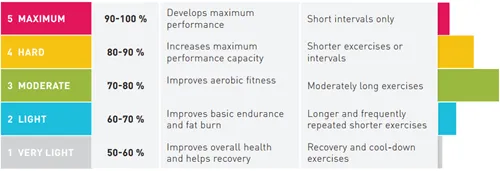
Tracking your workouts to ensure you’re reaching the right intensity zones, is not only a great way to maximize your performance, it can play a vital role in preventing overtraining and limiting the risk of injury.
When you take the intensity and frequency of your workouts too far you risk taking yourself into the dangerous overtraining category, putting your body’s adrenal function under stress and potentially leading to long-term illness. According to Bryce Hastings, Les Mills’ Head of Research, avoiding overtraining relies on preventative action, which means constantly reviewing your training load and how your body is feeling as a result. “The data you get from a Polar fitness tracker makes it easy to monitor workouts and prevent overtraining,” he says.

Overtraining: what to watch out for
- If you’re regularly doing high-intensity interval training workouts such as LES MILLS GRIT™ (where you use intervals to push your body to 85% of your maximum heart rate) and, over a four-week period, you notice your max heart rate is decreasing or your resting heart rate is increasing, it’s possible you’re overtraining..
- If you’re experiencing more fatigue or muscle soreness than normal, chances are you’re spending too much time in the 90-100% of max heart rate zone. Remember, it’s recommended that you spend no more than 40 minutes per week with your heart rate above 85% max. If you’re doing too much, reduce the load to avoid future injury.
Find out some more signs you could be overtraining here. If you’re keen to find the best tracker for your needs, you can learn more about the difference between an activity tracker and a heart rate monitor here.
Sign up to Fit Planet and get fresh health and fitness news and advice straight to your inbox. Subscribe
More about the author
Emma Hogan
Emma is a health and fitness writer with 20 years of experience creating evidence-based features that bridge the gap between scientific research and real-world application. Based in New Zealand, she works with global exercise scientists, physiotherapists, and internationally recognized fitness experts to uncover the latest insights in health, fitness, and human performance.
Known for making complex topics accessible and engaging, Emma writes on everything from strength training and recovery to motivation, behavior change, and lifelong wellbeing. Her work helps readers navigate an increasingly crowded health landscape and make informed choices grounded in credible research rather than trends or misinformation.


Fit Planet
Home exercise hacks: The tips home exercisers swear by

Fit Planet
Why exercise fights depression: scientists uncover how muscles talk to the brain

Fit Planet
Exercise for mental health: What the research says about feeling happier, healthier, and more resilient
Fit Planet
How to become a group fitness Instructor: A step-by-step guide

Fit Planet
Why music makes exercise feel easier, more enjoyable, and more effective

Fit Planet
Are you eating enough to support your workouts? 7 signs you're under-fueling your training

Fit Planet
10 signs you'd make a great group fitness Instructor

Fit Planet
Does exercise help you lose weight? What the science really says

Fit Planet
How much strength training do you need to live longer? Scientists say 90-120 minutes per week

Fit Planet
Should you change your workouts based on your menstrual cycle?

Fit Planet
When is the best time to exercise? Morning vs evening workouts explained

Fit Planet