Plant-based diets
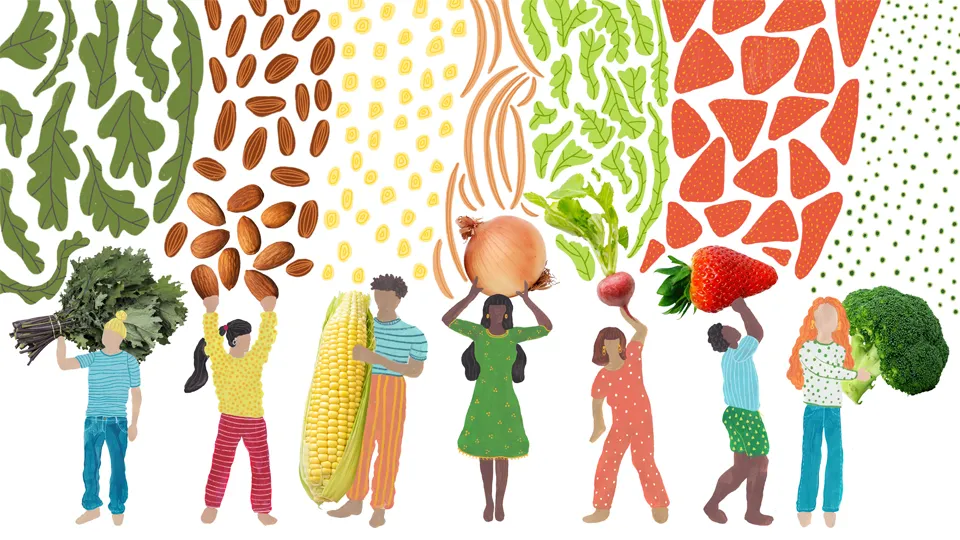
Will following the latest nutritional advice lead inevitably to vegetarianism, or can plant-based eating be for everyone?
The buzz in nutrition right now is definitely “plant-based”. On Instagram, #plantbased yields over 15 million posts. Plants are popular, it seems, at least in the world of social media.
Plant-based is also a term that crops up routinely in health research and news stories. One recent headline caught my eye: “A third of premature deaths could be avoided if we all cut out meat, Harvard study finds”. That’s a dramatic claim. But is it true? And what does “plant-based” even mean in this context?
Actually, it seems there is no official definition. But, because vegetarians and vegans have claimed the term, many of us now believe “plant-based” equals nothing but quinoa bowls and nut milk.
But others – including the Harvard professor to whom the recent claims about premature deaths were attributed – use a more literal translation. To them, “plant-based” means just that: a varied diet based on plants.
However, the Harvard “study” was not in fact a new piece of research. Rather, it was the quoted comments of Professor Walter Willett, an epidemiologist at Harvard’s T.H. Chan School of Public Health. He was speaking at a public health conference, where he didn’t actually say we’d all be better off giving up meat. He said: “We have just been doing some calculations looking at the question of how much could we reduce mortality shifting towards a healthy, more plant-based diet, not necessarily totally vegan, and our estimates are about one-third of deaths could be prevented”.
Willetts’ calculations were based, he later said, on multiple studies he has been involved with, as well as a substantial body of evidence. The general conclusion of that evidence is that more plant food is generally beneficial.
“Yes, but which diet should I follow?” we might legitimately ask.
A 2014 review published in the Annual Review of Public Health, titled “Can We Say What Diet is Best for Health?” attempted to seriously answer this question. The researchers looked at seven popular diets, including the low-carb; vegetarian/vegan; paleo and Mediterranean diets. They concluded the answer to the title question is no: there is no one diet that comes out as ‘best’.
But they also concluded that all of the diets surveyed contained good and healthful elements, and that the things they had in common pointed to a healthy pattern of eating which, they say, is likely to lead to better health and a longer life.
Those common elements were: limited refined starches, added sugars and processed foods; a limited intake of certain fats; and an emphasis on whole plant foods, with or without lean meats, poultry, fish and seafood.
There’s a wealth of evidence, the researchers said, that this pattern of eating (note the term pattern, not ‘diet’ in the sense of a restrictive eating regimen) is health-promoting.
“A diet of minimally processed foods close to nature, predominantly plants, is decisively associated with health promotion and disease prevention”, the study reported.
In other words, an eating pattern that can best be summed up in the words of writer Michael Pollan: “Food, not too much, mostly plants”. A plant-based diet.
To eat mostly plants, we may need to re-think how we put our meals together. Many of us are in the habit of basing our meals on a protein – often meat – and adding vegetables and starches around that. To be truly plant-based, it can be useful to flip that thinking: start with the vegetables, then add the other elements.
Meat is not outlawed in a plant-based diet. But think of it as a garnish, not the main event. This will almost guarantee you’ll eat more plants and fewer animal products.
It’s important to note that no matter what variation of “plant-based” diet you choose – vegetarian, vegan or including animal products – the quality of what you’re eating makes a huge difference. It is entirely possible, experts say, to eat a very unhealthy vegetarian or vegan diet, just as it is possible to be an unhealthy meat-eater.
A 2017 study published in the Journal of the American College of Cardiology found that a plant-based diet focusing on healthful plants – whole grains, vegetables, fruits etc – was associated with “a substantially lower risk of heart disease”. However, a plant-based diet based on less-healthy plant foods such as sweetened beverages, refined grains and sweets had the opposite effect.
So the take-home message is that plant-based eating is good, but quality is everything.
If you want more tried, tested and true news from the leading edge of health and fitness sign up to get Fit Planet insights and advice straight to your inbox.
Illustration by Anieszka Banks

Fit Planet
Stay in the game: The 12 min pre-hab routine top trainers swear by

Fit Planet
Sleep and exercise: Why better sleep could be the missing piece of your health puzzle

Fit Planet
Muscle pain after exercise: What it means and how to manage it

Fit Planet
What causes muscle cramps during exercise – and how can you prevent them?

Fit Planet
HIIT and sleep: What’s the sweet spot for better recovery?

Fit Planet
Sleep and athletic performance: How better sleep improves recovery and results

Fit Planet
Strength training and sleep: Can lifting weights help you sleep better?

Fit Planet
High performance mindset: what we can learn from elite athletes

Fit Planet
Home exercise hacks: The tips home exercisers swear by

Fit Planet
Why exercise fights depression: scientists uncover how muscles talk to the brain

Fit Planet
Exercise for mental health: What the research says about feeling happier, healthier, and more resilient

Fit Planet