5 club learnings that powered fitness growth in 2026

While economic pressures persisted and consumer expectations continued to evolve, the industry's strongest performers didn't chase every new trend. Instead, they doubled down on the fundamentals driving sustainable growth: participation, community, onboarding, programming, and experience. Here are five lessons that helped good clubs become great ones in 2026.
1. Fitness demand has reached a new level
Key takeaway:
Globally, consumers are more invested in their clubs than ever.
Driven by health-conscious Gen Z and Millennial consumers seeking meaningful experiences, operators reported strong participation levels throughout 2026. Even amid economic pressures, members continue to ringfence spending on fitness, increasingly viewing their gym membership as an essential part of their lifestyle. McKinsey’s Future of Wellness 2027 report found that more than a third of US consumers described wellness as core to their identity, a sentiment that was strongest among Gen Z and Millennial consumers. In the US, Health and Fitness Association (HFA) stats show:
- 81 million people were members at a US fitness facility in 2025 – a new all-time high and the fourth successive year of growth
- Total visits to fitness facilities reached nearly 7 billion
- Member churn declined 7.1% to the lowest rate in a decade.
In the UK, ukactive shared that:
- A record 12.2 million people are now members of a health and fitness club in the UK
- Visits to clubs have risen by 10% since 2024 – reaching 679 million
- The total income of the UK health and fitness hit £6.5bn, up from £5.7bn in 2024.
And the European Health and Fitness Market report echoes US and UK bouyancy, with:
- 67, 515 fitness facilities now operating across Europe, following 2.8% year-on-year growth
- The European fitness sector generated €39.1bn in revenue, up 9.1% year on year
The global data paints a picture of a resilient and deeply committed consumer base. The challenge now isn't simply attracting members, but understanding what keeps them coming back and deepening their connection to your club over the long term.

2. Experience becomes a major growth driver
Key takeaway:
Facilities no longer create differentiation. Experiences do.
Consumers have never had more ways to exercise, but with cost pressures, they're increasingly looking for experiences that deliver a social and fitness hit in one go. 62% of Gen Z believe that the gym is a place to socialize as well as exercise, 59% say the gym is their designated ‘third space’ and 83% want to combine fitness and friends more often.
The clubs winning in 2026 weren't necessarily the ones investing most heavily in equipment. They were the ones creating experiences members couldn't replicate elsewhere. From bringing DJs onto the gym floor and into cycle classes, refining timetables for a more fulfilling visit, and matching events to your community’s ‘personality’, the future of retention will be shaped by how clubs curate experiences that go beyond the workout and facilitate social connection.
Ish Cheyne, Head of Fitness at Les Mills New Zealand, says the key to building the social connections that drive long-term retention is to embed them into the new member journey from day one. “When a new member joins the gym, we give them a complimentary pass to bring a friend down for the first 7 days. That’s a benefit for the member, because they’re getting to know their way around with the comfort of a familiar face.”
“And it’s a benefit for the gym because it’s a referral. We don’t actively say it’s a referral and go after it for a membership. It’s fully about the new joiner. But it is a way for them to have someone to train with and for us to potentially win another new member.”

3. Reformer, recovery and hybrid fitness went mainstream
Key takeaway:
Members aren't fixating on one modality, they're building training ecosystems.
Consumer demand for diverse training experiences continued to grow last year. The 2026 Global Fitness Report found that 54% of all consumers want new workouts and ways to get fit, rising to 65% for Gen Z and Millennials. And within that younger cohort, 62% are looking for training that pushes them to their limits. As consumers seek greater variety in how they train, clubs that broaden their programming mix stand to gain a clear competitive advantage.
While strength training cemented its position as a table stakes offering, operators expanded their programming mix to include:
- Reformer Pilates
- Recovery services
- Functional strength
- Athletic conditioning
- Mind-body experiences
The industry’s strongest performers aren’t chasing trends, they’re following the interest signals to create complementary ecosystems that encourage members to visit more often. For Nuffield Health, which operates more than 100 clubs nationwide in the UK, the launch of LES MILLS REFORMER™ highlighted the significant role a diversified timetable can play in driving member engagement.
“LES MILLS REFORMER is just so different,” says Ria Summerhayes, Group Exercise Manager, Nuffield Health Farnborough. “We have over 40 classes on our timetable, so there’s a lot for our members to enjoy already, but adding this workout has opened up a whole new member base for us.”
“We’ve seen an upsurge in new members coming from local boutiques to us. It’s because we can offer something completely different to other studios. The class is constantly full, with 90% occupancy month-on-month. Acquiring LES MILLS REFORMER and the resulting new members means we’ve seen a 20% increase in our overall group exercise attendance as well.”
Other tactics leading operators have implemented this year include offering intense circuit workouts to support members’ HYROX race day training, meeting soaring demand for strength training by ramping up their studio offering to drive member outcomes and tackling the growing recovery market.
4. The first 30 days came into sharper focus
Key takeaway:
Retention starts before habits form.
One of the biggest learnings from 2026 was the growing importance of early member journeys, with many operators embracing new pathways to exercise, hiring for the community and atmosphere they want to create and curating timetables with broad consumer appeal.
Underpinning all of these tactics are honest conversations that reveal why members joined, what success looks like to them, and how clubs can help them build habits that last. Attendance during the first few weeks is one of the strongest predictors of long-term retention. And as we look to 2027, clubs increasingly recognise that onboarding isn't an operational process but the foundation on which lasting member relationships are built.
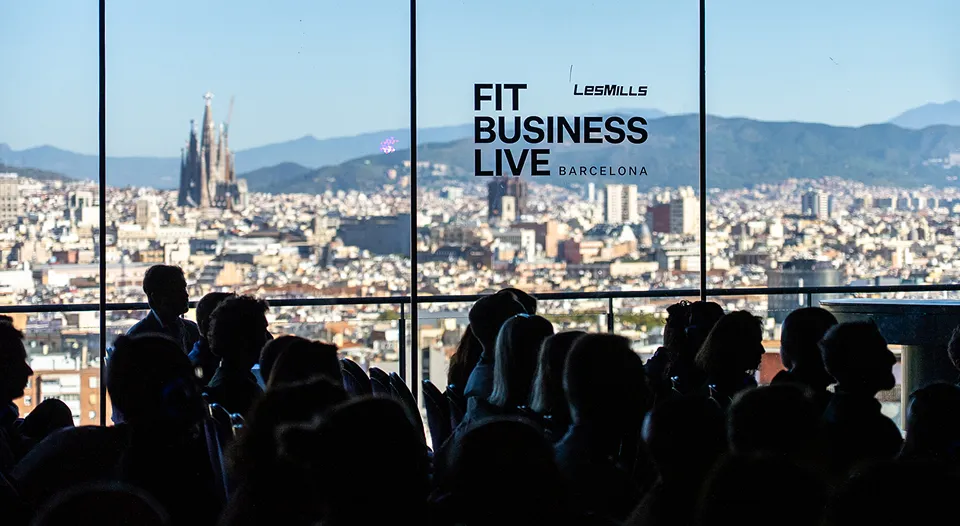
At FIT BUSINESS LIVE Barcelona in October 2026, Les Mills Head of Research, Bryce Hastings shared the importance of these early conversations for building trust with members: “Our job in the industry is to shift people from feeling they have to exercise, to genuinely wanting to. If we can get someone coming in initially because they had to, but they have a class experience that they want to return to, we've won.”
“The secret in those early stages is to keep intensity manageable. Just help new joiners work on the frequency and the activity itself and a sense of enjoyment so that they start to feel like they want to come. It’s about creating a framework based around three pillars. Autonomy (I choose), Competence (I can), and Relatedness (I belong). Adherence becomes much easier if we can create an environment where options are safe to try, the environment is inspiring, and people feel they are part of something bigger than themselves.”
“If we can achieve that in the first three to six weeks, we've got them. If at the end of the six weeks they still feel like they have to come, we're going to lose them.”

5. Group training powers growth across the business
Key takeaway:
Group training delivers impact far beyond the studio, powering retention, revenue and long-term growth.
For its latest Fitness Industry Growth Report, Xplor Fitness and Leisure asked 180 operators across 19 countries to identify their biggest growth drivers. The top three responses were marketing (64%), retention (57%), and group training (55%). Long valued for its ability to foster community, connection, and motivation, group training is now being recognised for something equally important: its commercial impact. Sitting alongside marketing and retention as a key engine of growth, operators are leveraging its ability to boost engagement, strengthening loyalty, and increasing member lifetime value.
And the financial opportunity to drive further income is clear. When asked which revenue streams are growing fastest, operators ranked group training classes second only to memberships, with 43% citing them as a major source of revenue growth. From supporting premium membership tiers to delivering greater perceived value, group training is helping clubs drive stronger returns.
LifeFit Group provides a compelling example of this trend in action. In 2018, the business operated 50 clubs and served 150,000 members. By 2026, that had expanded to 235 clubs and 800,000 members, while net member yield at Fitness First Black clubs increased from €49 to €62.70 per member and retention reached 70%.
Supporting that growth has been a significant investment in group training. Annual class volumes increased from 50,000 to 280,000 between 2018 and 2026, while the proportion of Les Mills classes on the timetable nearly doubled, rising from 21% to 41% of all available slots. The result is a powerful illustration of how aligning programming with member demand can fuel both participation and commercial performance.
DISCOVER IDEAS DESIGNED TO GROW YOUR CLUB
More about the author
Jo Bryce
Jo is a content specialist focused on the global fitness industry. Her role (as Global B2B Content Manager) at Les Mills brings the latest fitness and wellness developments to life, translating research, trends and real-world operator experiences into practical strategies that help fitness businesses navigate a rapidly evolving market.
As a writer, Jo has worked across a range of sectors spanning broadcast, technology and fitness, developing content for both consumer and business audiences. She holds a Master's degree in English Literature and enjoys running and boxing.


Clubs and Facilities
Video: Martin Seibold on the opportunities shaping fitness industry growth


Clubs and Facilities
LifeFit Group’s CEO shares strategy for driving retention, referrals and revenue

Clubs and Facilities
5 club learnings that powered fitness growth in 2026

Clubs and Facilities
Four key fitness findings operators need to know in 2026

Clubs and Facilities
How do you know your timetable is working?
Clubs and Facilities
Five things we learned at FIT BUSINESS LIVE BARCELONA

Clubs and Facilities
The simple gym design principle that powers profitability

Clubs and Facilities
What are the Best Group Training Classes to Attract New Gym Members?

Clubs and Facilities
5 best practices for building lasting member loyalty

Clubs and Facilities
Video: How Nuffield Health increased group fitness attendance by 20% with LES MILLS REFORMER

Clubs and Facilities