Stay in the game: The 12 min pre-hab routine top trainers swear by

Whether you're chasing a new PB, gearing up for a HYROX race, or simply enjoying the rhythm of regular training, avoiding injury is key to staying on track. Check out the science-backed 12-minute neuromuscular training routine that helps keep pro trainers off the sidelines and doing what they love.
Why injury prevention matters
You work out regularly, thrive on the feel-good buzz of exercise, and have a solid routine in place that keeps you motivated. Being forced to stand down due to injury would sabotage it all. The fact is, no matter how smart your workouts are, and how much your hone your technique, any activity comes with a chance of injury. And some people can be more prone to injury than others.
This is where preventative action is key.
What is pre-hab?
Pre-hab, or preventative rehabilitation, is a neuromuscular training routine that can help prime your body and support injury prevention. It involves targeted exercises designed to help improve stability, movement quality, coordination and control.
Physiotherapist Rob Lee has developed this simple 12-minute routine to help improve movement control and prepare your body for exercise.
The 12-minute pre-hab routine
"It’s a quick, well-rounded way to check in with my body and highlight any areas that need a little more attention." Summer Bradley, Les Mills Trainer
This short session draws on Rob’s background in professional football, his expertise coaching fitness Instructors, and the most recent research highlighting how developing neuromuscular control can lower injury incidence.
How does the pre-hab training work to reduce injury risk?
This short session progresses through different areas of focus – moving from core work to the glutes and hips, then through standing movement patterns that bring it all together. The final focus on standing puts the control into practice and incorporates balance.
“Essentially, the better the control of the lower limb, the less chance you have of injury,” says Rob. “By focusing on strengthening the glutes and core, you can improve hip and pelvic control and that can reduce the likelihood of sprains and soft tissue strains.”
Throughout the session, the idea is to train control, endurance and quality of movement, not chase fatigue or maximal force. Rob encourages you to focus on getting in the zone with the coordination, sequencing and timing of these movements.
“It’s not specifically about getting stronger, it’s about improving your control,” he explains. “This routine provides an opportunity to rehearse and refine quality movement patterns, and it’s these improvements in movement quality that can help reduce the likelihood of injury.”
"Making pre-hab work in real life helps me feel physically and mentally ready to train.” Jess Wong, Les Mills Trainer
When should you do this routine?
Ideally, you would do this routine before you begin your workout. It can also be used as a stand-alone routine.
Is this routine suitable for beginners?
Yes. Each exercise includes three progression levels, allowing you to choose an option that matches your current ability. Level 1 is the least demanding and Level 3 is the most. It’s important to choose a level you think you can do well, and make sure you can master the movements before you progress to the next level.
If at any time you feel you’re not in control of the movements, drop down a level. While the routine is suitable for all abilities, the emphasis on absolute control means it can feel surprisingly challenging, even for experienced exercisers. The aim isn't to rush through the exercises, but to perform each movement with precision and intention.
Why trainers swear by it
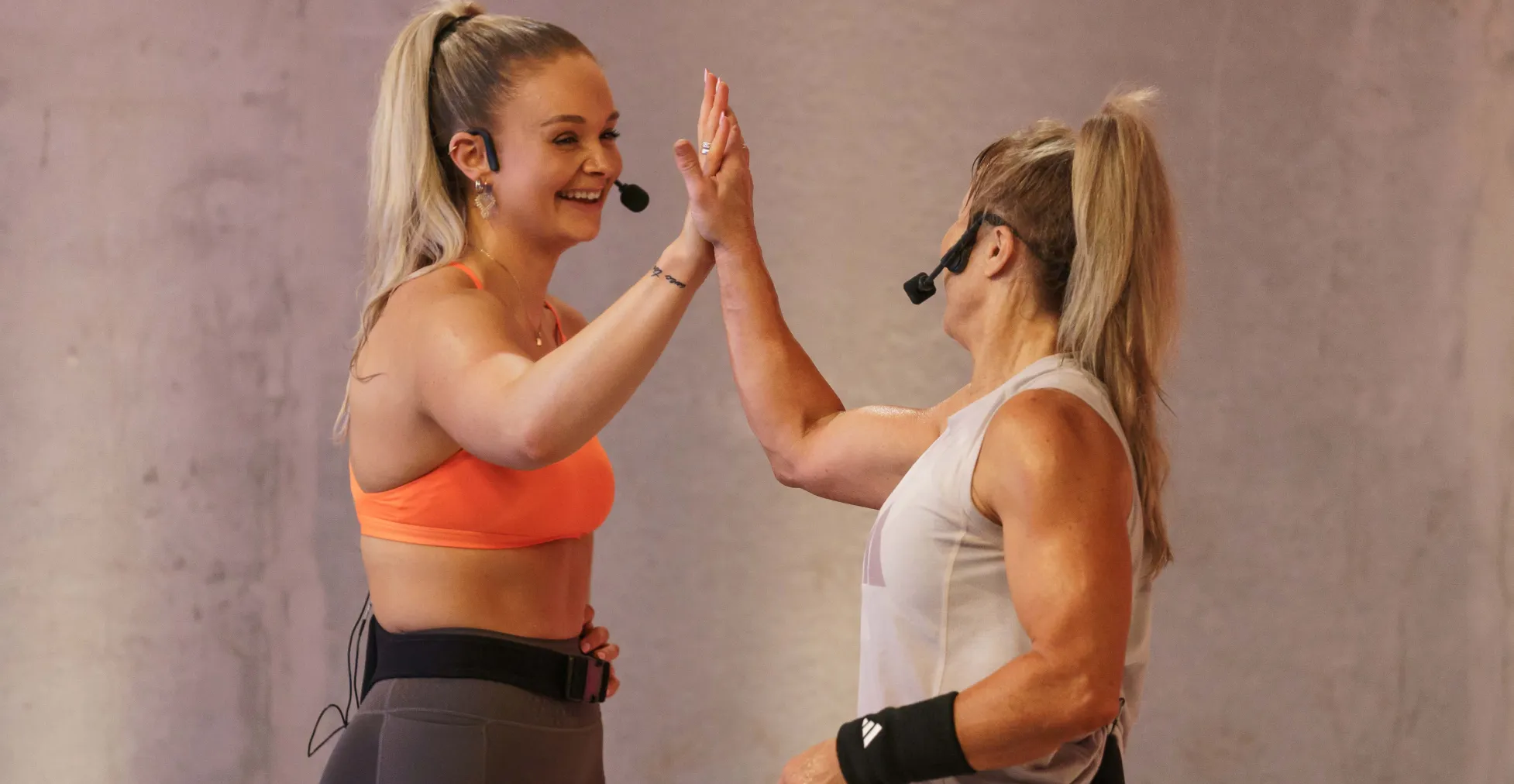
As a LES MILLS PILATES™ Instructor, Summer Bradley is a huge advocate for making time to move with intention. "What stands out about this pre-hab session is the value it delivers in such a short amount of time,” says Summer. “It’s a quick, well-rounded way to check in with my body and highlight any areas that need a little more attention. And if this is all I have time for on a busy day, I know I’ve still done something positive for my body.”
When Les Mills Trainer Jess Wong started using this routine, it gave her a deeper appreciation for warming up and strengthening her core and hips. “Now I can feel my core engage more easily and I find greater stability in moves like a backwards-stepping lunge in BODYPUMP™ or a floating half moon in BODYBALANCE™.
“It’s taught me good habits and pre-hab has become the appetizer to my workouts,” says Jess. “Even when time is tight, I’ll still fit in a hover or a single-leg squat while refilling my water bottle.
“It’s also inspired me to focus more on strength and control. I’ve started doing more workouts like LES MILLS SHAPES™ and LES MILLS REFORMER™. But the biggest shift is realizing it doesn’t have to be all or nothing. Making pre-hab work in real life helps me feel physically and mentally ready to train.”
More about the author
Emma Hogan
Emma is a health and fitness writer with 20 years of experience creating evidence-based features that bridge the gap between scientific research and real-world application. Based in New Zealand, she works with global exercise scientists, physiotherapists, and internationally recognized fitness experts to uncover the latest insights in health, fitness, and human performance.
Known for making complex topics accessible and engaging, Emma writes on everything from strength training and recovery to motivation, behavior change, and lifelong wellbeing. Her work helps readers navigate an increasingly crowded health landscape and make informed choices grounded in credible research rather than trends or misinformation.

Fit Planet
Stay in the game: The 12 min pre-hab routine top trainers swear by
Fit Planet
Sleep and exercise: Why better sleep could be the missing piece of your health puzzle

Fit Planet
Muscle pain after exercise: What it means and how to manage it
Fit Planet
What causes muscle cramps during exercise – and how can you prevent them?

Fit Planet
HIIT and sleep: What’s the sweet spot for better recovery?

Fit Planet
Sleep and athletic performance: How better sleep improves recovery and results
Fit Planet
Strength training and sleep: Can lifting weights help you sleep better?
Fit Planet
High performance mindset: what we can learn from elite athletes
Fit Planet
Home exercise hacks: The tips home exercisers swear by

Fit Planet
Why exercise fights depression: scientists uncover how muscles talk to the brain

Fit Planet
Exercise for mental health: What the research says about feeling happier, healthier, and more resilient
Fit Planet