How much strength training do you need to live longer? Scientists say 90-120 minutes per week

For a longer, healthier life, the strength training sweet spot appears to be 90–120 minutes a week.
Strength training is any exercise that challenges your muscles against resistance, using weights, bodyweight, bands, or structured resistance-based movements. It offers benefits across the board, and researchers have been delving deep into the optimal dose for maximum health benefit.
The newest findings show roughly two or three focused strength sessions per week is ideal. This amount is linked to a lower risk of cardiovascular and neurological death. The researchers found that 90–120 minutes of weekly strength training was associated with 19% lower risk of cardiovascular death and 27% lower risk of neurological death. Interestingly, going above and beyond to do more than 120 minutes a week is unlikely to provide any additional longevity benefits.
Key takeaways
- Aim for 90–120 minutes of strength training each week to support longevity.
- Combine strength training with regular cardio for the strongest health benefits.
- Bodyweight exercises, weights, resistance training and low-impact strength work can all help build strength.
- A balanced weekly routine should include strength, cardio, flexibility and mobility.
- Les Mills strength workouts are designed to help people train safely, progress confidently and stay motivated.

These latest findings, published in the British Journal of Sports Medicine in June 2026, saw researchers track the health data from almost 150,000 people across 30 years.
Researchers say strength training delivered the most profound longevity effect, but the benefits were amplified when strength workouts were mixed with aerobic training.
People who did a lot of cardio exercise (like walking, running, cycling or cardio classes) and regular strength training (like lifting weights or resistance exercises) had the best health outcomes. People who did a high amount of cardio each week, plus 1.5 to 2 hours of strength training, saw the biggest benefit. They had a 45% lower risk of death compared to less active people.
This is supported by a 2022 meta-analysis, involving results from approximately 1.5 million adults across 16 prospective studies. The researchers behind this study linked strength training to reduced cardiovascular disease, cancer, and diabetes risk, and a 10% to 17% lower risk of all-cause mortality. Like the 2026 study, they also noted that mixing strength and aerobic exercise produced the greatest reductions in mortality risk.
Adding more years is just the beginning …
What are the benefits of strength training beyond longevity?
Bryce Hastings, Les Mills Head of Research, explains that adding resistance training to your routine won’t just help you live longer; it will help you enjoy good health for longer – which is fundamental to happiness in our later years.
When you focus on building muscle, you become stronger, fitter, burn more calories, and enjoy long-term fat-burning benefits. And there are plenty more reasons to love lifting. There’s evidence that strength training can improve heart health, along with a 2017 study showing how high-repetition strength training can improve bone mineral density and grow stronger bones. Hastings says the bone-strengthening benefits of resistance training are particularly important, as your bone mineral density declines at an accelerated rate once you hit 40, meaning you’re more likely to suffer from fractures and osteoporosis.
When it comes to mental health, research has highlighted how a strength training regime involving lunges, lifts, squats and crunches can diminish the effects of anxiety. We also know that those who develop moderate muscle strength are 32% less likely to develop diabetes. It can also improve your sleep. In a 2019 study, scientists found that including strength training in your workout routine can add up to 40 minutes more sleep each night.
For fitness professional and athlete Erin Maw, increasing her focus on strength training has been transformational. “It has absolutely improved my athletic performance. It strengthens your bones and stabilizes muscles around your joints. It makes your glutes, hamstrings, and quads so much more powerful, plus it strengthens your core – and research shows that helps you run faster." She says that as a woman, building strength is critical. “Women need strength training. As we get older, we reduce our ability to build and retain muscle, so strength training is absolutely essential for lifelong health and fitness.”
Learn 5 science-backed reasons why strength training is a non-negotiable for women.

Is lifting weights the only way to build strength?
If you think lifting heavy weights on the gym floor is the only way to enjoy the perks of strength training, think again. While this most recent study focused on weight-based exercises, the researchers noted that other types of muscle-strengthening exercise, such as bodyweight-based strength training (involving exercises like push-ups and squats) would also be beneficial. And there are many strength-building benefits that come from low-impact workouts like Pilates.
When should you start strength training?
While it’s never too late to start strength training, the younger you start, the better the benefits. Some years back, a team of Swedish scientists found that young people between the ages of 16-19 who had greater leg strength were more likely to live a longer, healthier life, with fewer disabling problems as they age. Interestingly, the experts suspect this could be linked to self-esteem and anxiety, as people with poorer muscular strength also have lower levels of self-esteem and higher levels of anxiety – both of which have been shown to cause health problems throughout life.
What’s the best weekly strength training routine?
The latest research shows between 90–120 minutes of strength training each week is the optimal dose. The maximum life-lengthening benefit comes when you combine muscle strengthening and aerobic activities.
The importance of workout variety is highlighted by another 2026 study showing that a high variety of exercise is linked to a 19% lower risk of death from all causes compared to low variety.
With this in mind, Hastings recommends a weekly routine of two resistance exercise training sessions focusing on the major muscle groups, with three to four cardio sessions, plus one flexibility and mobility-based session as the ideal prescription.
Learn how to combine strength, cardio, flexibility and mobility for longevity.
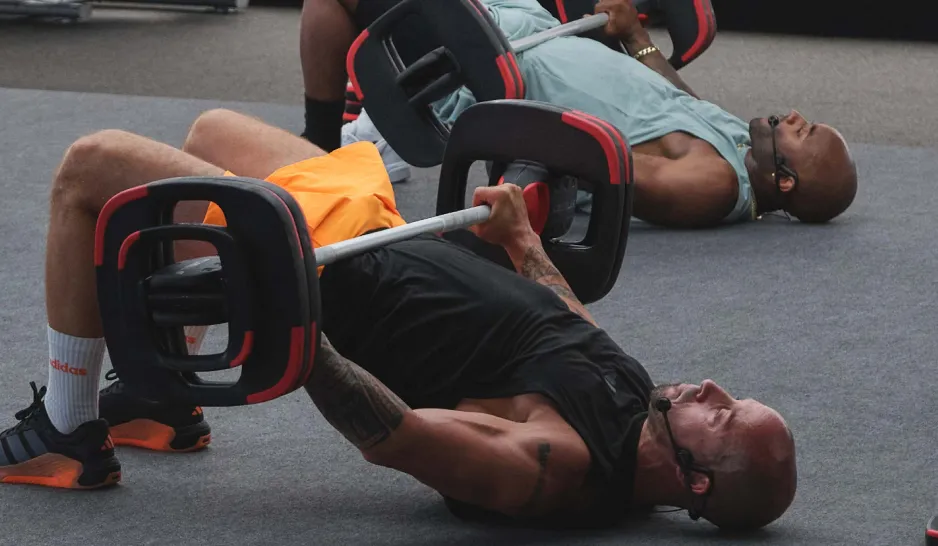
Which science-backed strength workouts can help you build strength?
Les Mills offers a variety of science-backed strength training options.
This is where Les Mills brings research to life, translating exercise science into structured, motivating strength workouts that help people train safely, progress with confidence and build lasting fitness.
BODYPUMP HEAVY™ is tempo-based weightlifting with traditional lifting techniques, slow moves and long recoveries. You can expect squats, presses, deadlifts and cleans, performed at slow tempos to support technical mastery and muscle growth. Results come primarily from the load lifted rather than high repetition volume. Find a BODYPUMP HEAVY class near you, or do BODYPUMP HEAVY at home using LES MILLS+.
LES MILLS STRENGTH DEVELOPMENT™ is a total-body workout that takes you through three training blocks. From slow controlled moves for pure strength, to hypertrophy for muscle building, plus integrated training that feels athletic and explosive. In one workout, you get it all. Find a LES MILLS STRENGTH DEVELOPMENT class near you , or do LES MILLS STRENGTH DEVELOPMENT at home using LES MILLS+.
BODYPUMP™ is the original barbell workout and one of the world’s most widely taught strength programs, available in 16,000 fitness clubs worldwide. Built on the science of high-repetition resistance training – known as The Rep Effect – it improves muscular endurance, overall fitness and bone health. Find a BODYPUMP class near you, or do BODYPUMP at home using LES MILLS+.

The takeaway:
For lifelong strength and longevity, aim for 90–120 minutes of strength training each week, supported by regular cardio, mobility, and workout variety. The best routine is one you can perform safely, progress over time, and keep coming back to.
The common FAQs about strength training
How many minutes of strength training should I do each week?
Aim for 90–120 minutes of strength training each week. Research suggests this is the optimal amount for longevity, with the strongest benefits seen when strength work is combined with regular cardio exercise.
Is strength training better than cardio for longevity?
Strength training and cardio support longevity in different ways. The best results come from doing both: strength training helps build muscle, bone density and functional fitness, while cardio supports heart health and overall endurance.
Can bodyweight exercises count as strength training?
Yes. Bodyweight exercises such as squats, lunges, push-ups and planks can count as strength training, especially when they challenge your muscles and become progressively harder over time.
How often should beginners do strength training?
Beginners can start with two strength training sessions a week, focusing on good technique, controlled movement and major muscle groups. As strength and confidence improve, you can gradually increase intensity, load or workout variety.
What is the best mix of cardio and strength training?
A strong weekly routine includes two resistance training sessions, three to four cardio sessions, and one flexibility or mobility-based session. This mix supports strength, stamina, joint health and long-term fitness.
What equipment do you need to build strength?
You don’t need a whole gym-load of gear to become your strongest. Watch and learn how to build strength and fitness with just two weight plates.

More about the author
Emma Hogan
Emma is a health and fitness writer with 20 years of experience creating evidence-based features that bridge the gap between scientific research and real-world application. Based in New Zealand, she works with global exercise scientists, physiotherapists, and internationally recognized fitness experts to uncover the latest insights in health, fitness, and human performance.
Known for making complex topics accessible and engaging, Emma writes on everything from strength training and recovery to motivation, behavior change, and lifelong wellbeing. Her work helps readers navigate an increasingly crowded health landscape and make informed choices grounded in credible research rather than trends or misinformation.


Fit Planet
Home exercise hacks: The tips home exercisers swear by

Fit Planet
Why exercise fights depression: scientists uncover how muscles talk to the brain

Fit Planet
Exercise for mental health: What the research says about feeling happier, healthier, and more resilient
Fit Planet
How to become a group fitness Instructor: A step-by-step guide

Fit Planet
Why music makes exercise feel easier, more enjoyable, and more effective

Fit Planet
Are you eating enough to support your workouts? 7 signs you're under-fueling your training

Fit Planet
10 signs you'd make a great group fitness Instructor

Fit Planet
Does exercise help you lose weight? What the science really says
Fit Planet
How much strength training do you need to live longer? Scientists say 90-120 minutes per week

Fit Planet
Should you change your workouts based on your menstrual cycle?

Fit Planet
When is the best time to exercise? Morning vs evening workouts explained

Fit Planet