What's the best way to test your strength?

There’s a lot to love about strength training. It builds power, supports longevity, protects your joints, and boosts feelings of confidence. But once lifting becomes part of your routine, you’ll likely ask yourself this: how do I know I am actually getting stronger?
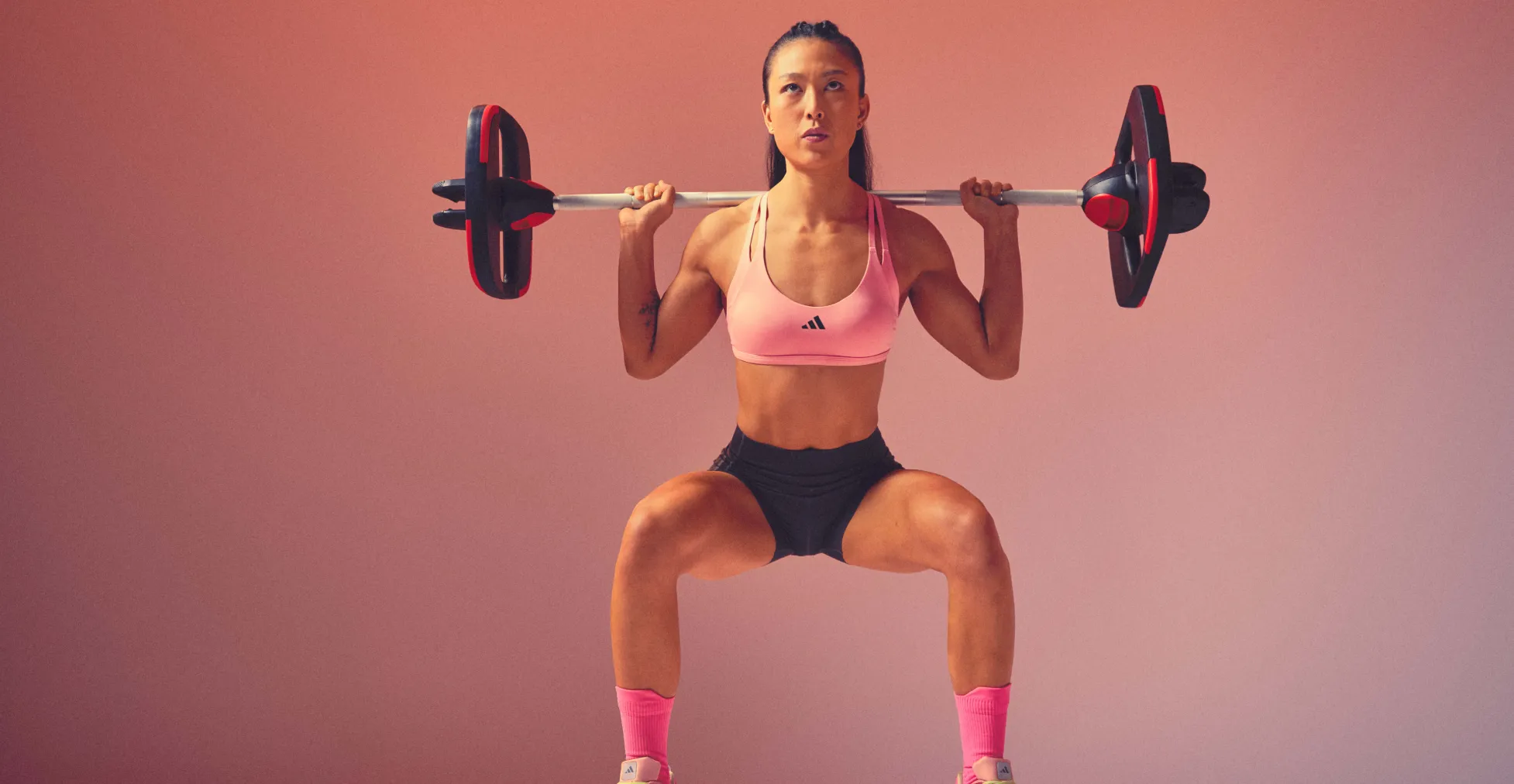
There are lots of ways to track strength gains. Some avid lifters will obsess over their one‑rep max bench press, others swear by a five‑rep max on the squat rack. Group training regulars might measure progress by making it through a full BODYPUMP™ squat track with more weight on the bar. Some people simply count how many push‑ups they can string together before their arms quit.
It’s clear there’s no ‘one-size-fits-all’ strength test.
So, to get to the bottom of what test is really best, we turned to professional fitness research scientist DrJinger Gottschall to explore why strength testing matters, and how to choose the approach that suits you best.
Why measuring your strength matters
According to Gottschall, having a baseline strength measurement is an anchor point on your training journey. “Without a baseline, it’s impossible to know if something is working. With a baseline measure, change becomes measurable, training decisions have meaning, and confidence comes from data.” Jinger adds that baseline measures also help inform your training progression, giving you guidance on how much load or how many reps you can currently do while moving safely.

BASELINE STRENGTH TESTING GIVES YOU:
- Clarity on where you're starting
- Motivation, because progress becomes visible
- Confidence to move safely and choose the right load
- Meaningful decisions, based on data, not guesswork
Is 1RM testing really the gold standard?
The one‑rep max (1RM) test involves determining the maximum weight you can lift with proper form for a single repetition. For decades, has been treated as the gold standard for measuring maximal strength. And for some people, it really is.
It’s highly reliable and works brilliantly for powerlifters, competitive athletes, and anyone who wants to measure absolute strength with precision.
But ‘best’ is relative. A 1RM isn’t right for everyone. It demands experience, confidence, supervision, and a clear goal. If your training is about general strength, health, or consistency, there may be easier ways totrack your progress.

Simple, self‑led strength tests for everyday exercisers
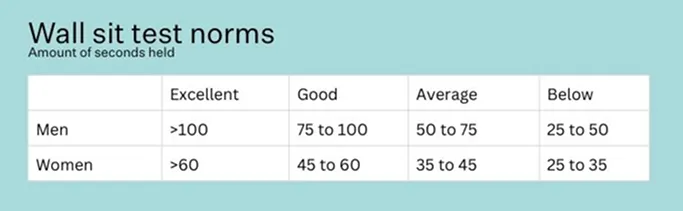
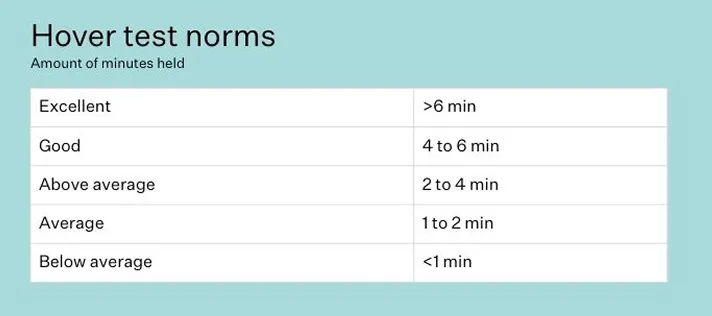
Gottschall suggests starting with tests that are simple, repeatable, and safe to perform on your own. So what do these tests look like? The wall squat test is a reliable lower‑body strength and endurance test and the hover test is a straightforward way to assess core strength and shoulder endurance.
The wall squat test
Start with your feet shoulder-width apart and your back against a smooth vertical wall. Slowly slide your back down the wall until both your knees and hips are at a 90-degree angle. Lift one leg off theground and start the timer. When you can no longer keep that leg off the ground stop the timer. After a period of rest, test your other leg.
The hover test
Assume a hover position on your forearms with your hips lifted off the floor so your body creates a straight line from head to toe. Start timing and stop the timer when your hips lower and you’re no longer able to hold your back in a straight line.
Gottschall’s favorite strength test…
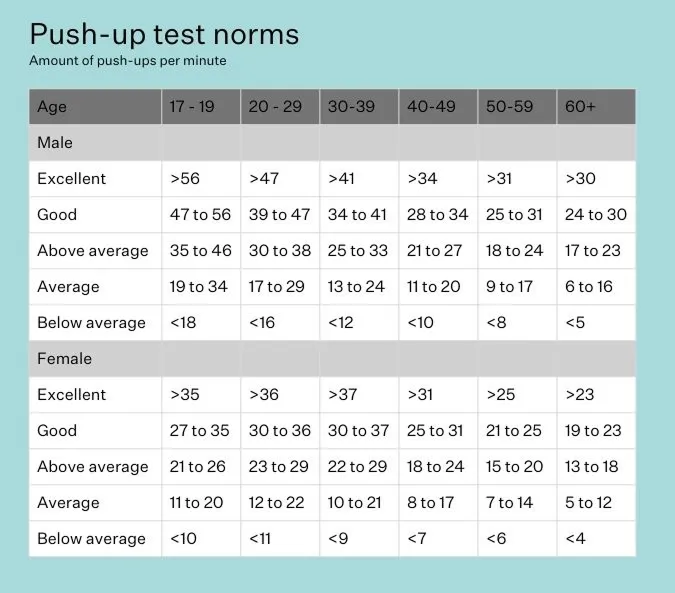
Ask Gottschall for the one test she personally relies on, and she doesn’t hesitate: the push-up test.
Not only does push-up capacity provide a solid measure of upper‑body strength and muscular endurance, but it’s also deeply connected to overall health. Researchers have found that the number of push-ups you can power through without stopping is a potential indicator of your cardiovascular health and longevity. A 10-year study of 1104 firefighters showed that men who could complete 40 or more push-ups had a 96% lower risk of developing cardiovascular disease compared to those who could do 10 or fewer.
The push‑up test
Start in standard push-up position; hands shoulder-width apart, body straight from head to heels. Lower your body until your chest nearly touches the ground. Push back up to the starting position. Repeat without pausing, ensuring good form for every rep (no sagging hips or flared elbows).
Jinger notes, “While the push-up test is one of my favorites, it is likely to lead to more delayed onset muscle soreness, so be prepared for this! It’s best if you focus on good form – and ideally have someone watch you.”
Want to get better at push-ups? Try this 16-day push-up challenge
What’s the deal with grip strength testing?
Grip strength is another go‑to measure, often discussed as a broader indicator of health and longevity. Testing requires a hand dynamometer, but the data can be powerful. Lower grip strength has been associated with a higher risk across a range of health measures, and some even suggest it could be considered a new vital sign. According to a large-scale study (involving over 500,000 participants), low grip strength is linked to a higher risk of all-cause mortality, with a specific increased risk of cardiovascular disease, respiratory illness, and cancer. The researchers found that for every 5kg decrease in grip strength, mortality risk increased by16-20%, cardiovascular death risk increased by 19-22% and respiratory disease death risk increased by 24-31%.
How to test grip strength:
Grip strength is most commonly measured using a hand dynamometer (which assesses the force exerted when you squeeze and indicates muscle strength in the upper body). You hold the dynamometer in one hand and squeeze as hard as possible for 3-5 seconds to get a measure. Good grip strength is between 30-48kg for males and between 16-30kg for females(depending on age)
Don’t have a dynamometer? Try the Towel Twist Test. Twist a wet towel as hard as you can for 10–15 seconds. Compare how long you can maintain the twist or how much water you can wring out.
Want to try some more simple health tests?
Check out how to assess your flexibility, your balance, and your mobility.
Ready to level up your lifting?
Once you start measuring your strength, you learn what’s possible now and where you can push next. If you’re feeling stronger, moving well, and hitting your targets, it might be time to raise the bar. Review this checklist to determine if you should be lifting more.
Learn more health insights from Dr Jinger Gottschall @jingerfitness.
More about the author
Emma Hogan
Emma is a health and fitness writer with 20 years of experience creating evidence-based features that bridge the gap between scientific research and real-world application. Based in New Zealand, she works with global exercise scientists, physiotherapists, and internationally recognized fitness experts to uncover the latest insights in health, fitness, and human performance.
Known for making complex topics accessible and engaging, Emma writes on everything from strength training and recovery to motivation, behavior change, and lifelong wellbeing. Her work helps readers navigate an increasingly crowded health landscape and make informed choices grounded in credible research rather than trends or misinformation.


Fit Planet
High performance mindset: what we can learn from elite athletes
Fit Planet
Home exercise hacks: The tips home exercisers swear by

Fit Planet
Why exercise fights depression: scientists uncover how muscles talk to the brain

Fit Planet
Exercise for mental health: What the research says about feeling happier, healthier, and more resilient
Fit Planet
How to become a group fitness Instructor: A step-by-step guide

Fit Planet
Why music makes exercise feel easier, more enjoyable, and more effective

Fit Planet
Are you eating enough to support your workouts? 7 signs you're under-fueling your training

Fit Planet
10 signs you'd make a great group fitness Instructor
Fit Planet
Does exercise help you lose weight? What the science really says
Fit Planet
How much strength training do you need to live longer? Scientists say 90-120 minutes per week
Fit Planet
Should you change your workouts based on your menstrual cycle?
Fit Planet