Squat depth

If you want to get stronger, and perform at a higher capacity for longer, then using high rep training to build strength endurance will make it happen. And if you want to maximize the gains, perfecting your squat is a great place to start. Rob Lee, Les Mills’ expert technical adviser and physio delves into the science and explains the best approach.
What is the ideal squat depth?
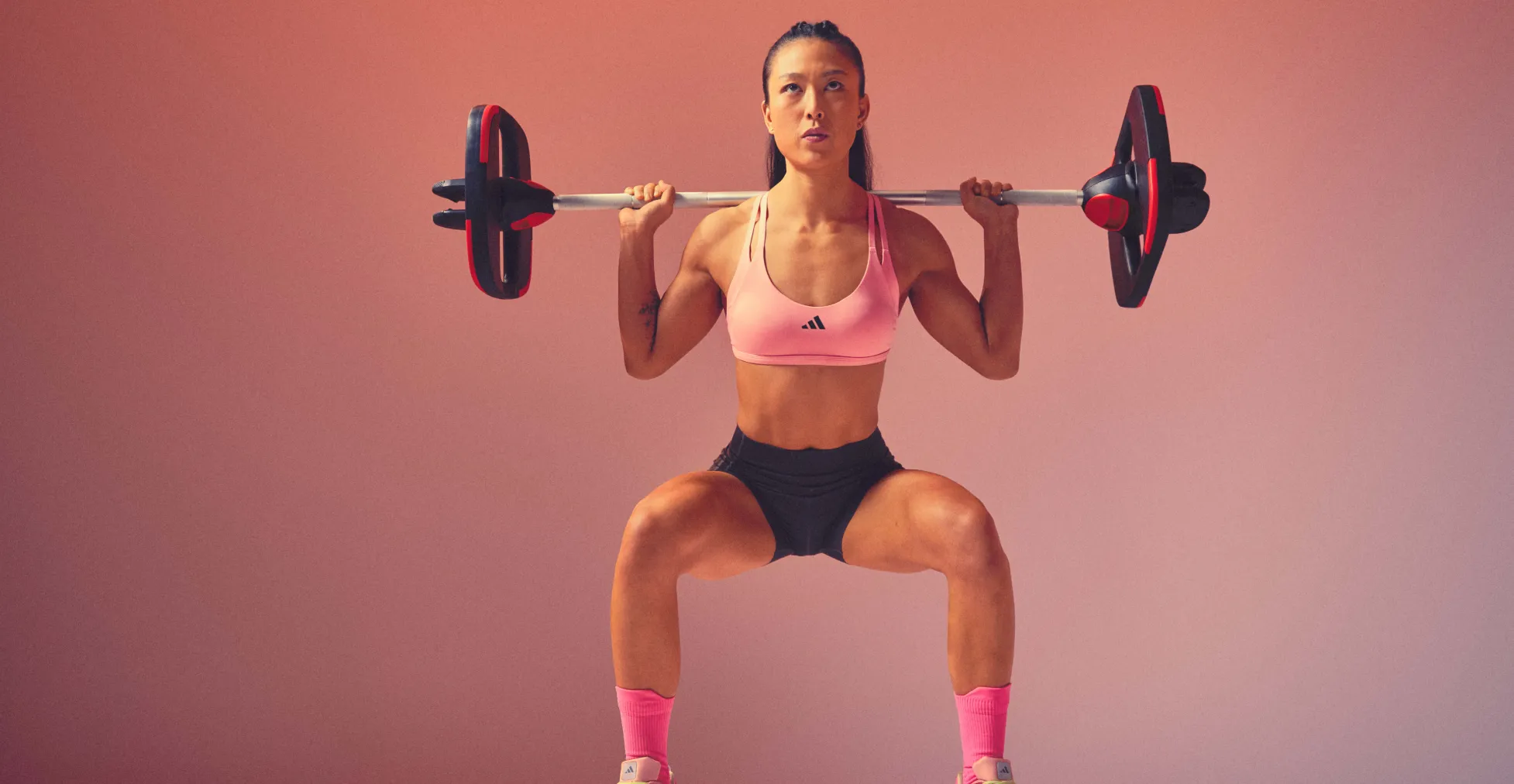
During a BODYPUMP™ workout, the ideal squat range is 90 degrees of knee flexion. Although there are range variations utilized within the workout, the full range 90-degree squat is the predominant range depth.
But in reality, there’s often an undetected discrepancy in this 90-degree range. If you’re consistently squatting shallower than 90 degrees, you could be missing out on the extra drive required at this depth – and the positive training effects it brings.
I firstly encourage you to closely observe your own squatting range and feel the difference in demand of the different range depths.
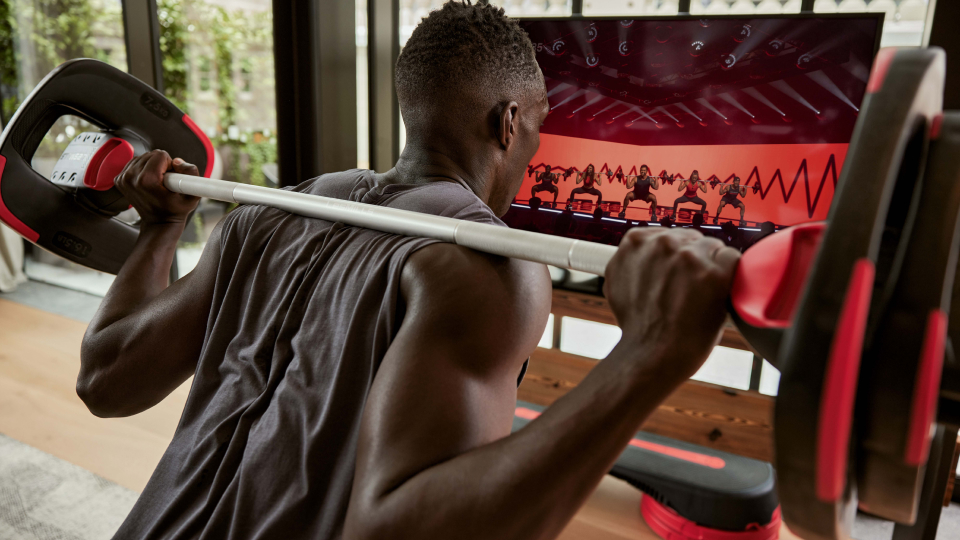
Research looking at the effects of both the depth and load in BODYPUMP participants, suggests there’s a higher average and peak muscle activation of your glute max and vastus lateralis quad muscle when squatting to 90 degrees. They also found peak activation of your main hamstring muscle and lateral calf muscle increased when squatting to this range.
Other biomechanical studies have supported these findings, finding higher muscle activations of similar muscles when squatting to 90 degrees, compared with other depths.
This is thought to be largely due to the ‘sticking point’ or ‘sticking region’ that is created at 90 degrees of knee flexion. At this point, the load of the bar is at its furthest from the knee, creating a mechanical disadvantage and essentially meaning it needs more force to be created by your muscles to be moved back up again.
That is why we see the highest muscle activation of the muscles moving the knee joint such as the quads in this part of the range. The glutes that primarily drive the hips in the squat, kick in extra hard here, and we see very high activity in them as they help the quads out through the toughest part of the squat.
That is why this part of the squat should feel the hardest as it is the most demanding. You will often hear coaching focusing on squeezing and driving the glutes from the bottom of the squat to encourage you to work at this depth effectively and consistently.
If you can squat to 90 degrees or lower with just your bodyweight, it’s likely you don’t have any mobility restrictions preventing this range and it might just be a case of consciously taking your depth there.
During a BODYPUMP workout, the slower squat tempos like the 4/4 is a great opportunity to make sure you are hitting this depth, as there is plenty of time to reach it. Technique-wise, shifting the hips back and down should help you reach the 90-degree range and reduce the likelihood of overloading the knees.
With the above findings in mind, hitting the 90-degree range may enhance results, strength gains and intensify that BODYPUMP burn. So taking note of your own range and ensuring you’re hitting this depth is a good place to start before adding load.
What is the ideal squat weight to lift during BODYPUMP?
Following the coaching of doubling your warm-up weight if you’re new, or increasing it by 2-4 times if you’re advanced, should land you on the ideal weight.
This has been specifically designed to allow you to keep up with the class and keep you in the strength endurance training realm. So adding too much weight is essentially self-limiting – this is the genius of BODYPUMP choreography.
Everyone has a different relative strength, so finding your own sweet spot is key. You don’t want to be going to absolute failure or fatigue.
On average there are 99 squat repetitions per class and research data tells us we see the average load at around 20-25% of a one-rep maximum.
In terms of muscle activity, research performed on BODYPUMP loads on a participant group indicates that adding load will increase the average and peak activity of your glute max in particular. This means that making small incremental additions to your load while still staying within the guidelines could increase your training effects.
If you’re new to the workout, it is likely you will be able to add load as you do more workouts and adapt to the training. If you’re a more advanced BODYPUMPer, you may have plateaued with your load, having already made a lot of adaptations in response to the training.
In summary, take time to notice the consistency of the depth of your squat during each workout. Your goal is to keep up with the repetitions set to the music and hit the 90-degree squat range throughout the squat track. You should perform the workout with weights that allow you to do so. If you’re making additions to your load, do so incrementally, ensuring you’re able to maintain the range and timing of the workout.
3 SQUAT DRILLS TO SAVE YOUR KNEES

Discover three quick and easy squat drills that will help you squat better, while protecting your knees.
Sign up to Fit Planet and get fresh health and fitness news and advice straight to your inbox. Subscribe

Fit Planet
High performance mindset: what we can learn from elite athletes
Fit Planet
Home exercise hacks: The tips home exercisers swear by
Fit Planet
Why exercise fights depression: scientists uncover how muscles talk to the brain

Fit Planet
Exercise for mental health: What the research says about feeling happier, healthier, and more resilient
Fit Planet
How to become a group fitness Instructor: A step-by-step guide
Fit Planet
Why music makes exercise feel easier, more enjoyable, and more effective

Fit Planet
Are you eating enough to support your workouts? 7 signs you're under-fueling your training
Fit Planet
10 signs you'd make a great group fitness Instructor
Fit Planet
Does exercise help you lose weight? What the science really says
Fit Planet
How much strength training do you need to live longer? Scientists say 90-120 minutes per week
Fit Planet
Should you change your workouts based on your menstrual cycle?
Fit Planet