How to unlock your push-up potential (and why it's worthwhile)
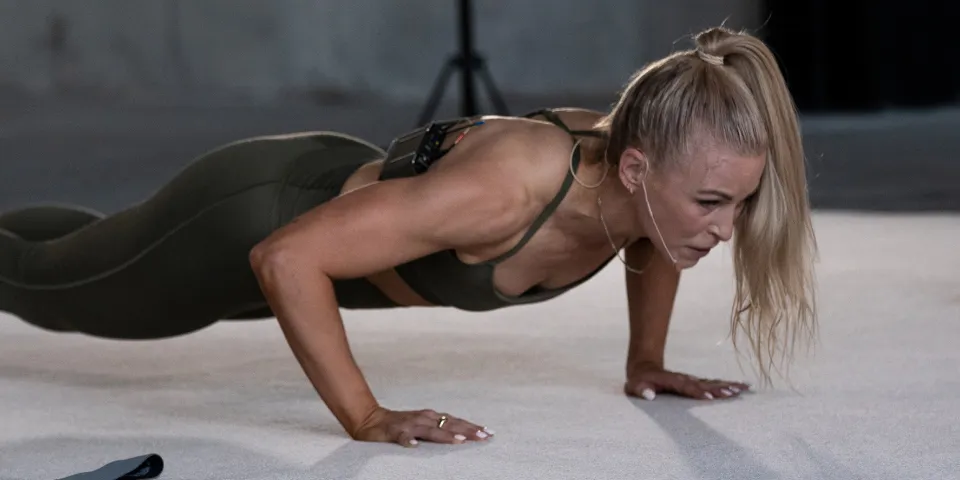
Experts say whether you do them on your knees or toes, push-ups are one exercise worth mastering.
Read on and you’ll discover:
- Why you shouldn't skip push-ups if you can't do them on their toes
- How push-ups are superior to the bench press
- What to do if you want to progress from knee push-ups to push-ups on your toes
- A 16-day push-up challenge
“To me, the push-up is the squat of the upper body,” says Les Mills Creative Glen Ostergaard. “It’s a foundational movement and I love it because it recruits so many muscles at once. If you think about how about how the squat uses the glutes, the push-up does the same thing for our lats. Yes, it targets the chest and anterior deltoid, but it’s also a massive exercise for the upper back, core and triceps. It really ticks all the boxes.”
Glen is not alone in his love for the push-up. Following a 2019 study, researchers called out push-ups are the perfect measure of health and fitness, highlighting that the ability to do 40 full push-ups is the single best indicator of cardiovascular health and longevity for men.
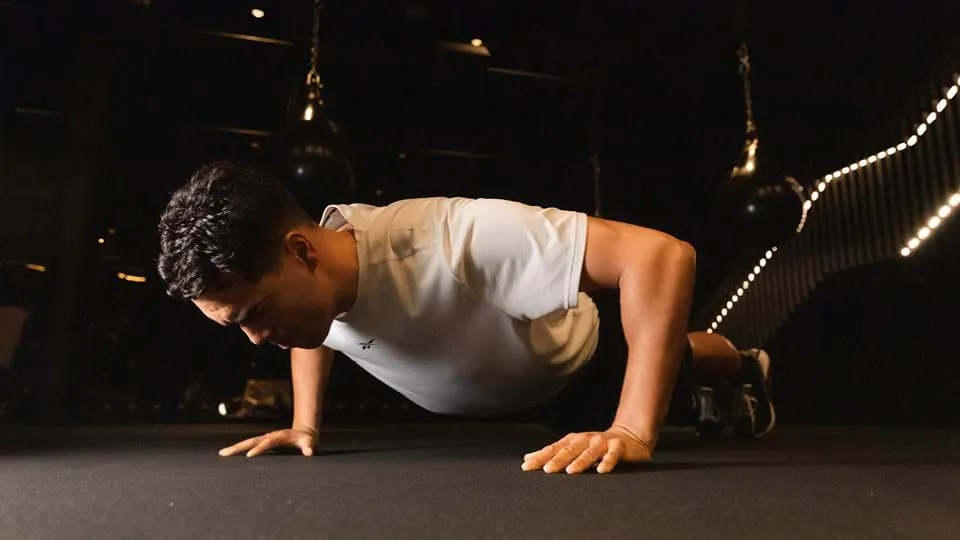
However, while full push-ups enjoy much fanfare, the easier to manage push-up on your knees variation doesn't always get the same adoration. In fact, these modified push-ups often cop a fair bit of flack, with some labeling them as an ineffective exercise that won't get you any stronger.
Thankfully, findings published in the Journal of Applied Biomechanics have cleared up the conflict, showing that both the toe and knee variations of the push-up are worthwhile.
"Don't leave push-ups out of your workout because you cannot perform them on your toes. Knee push-ups are a valuable alternative.”
“We have been able to demonstrate that the overall ratio of muscle activation in the upper body when you do a push-up on your knees or toes is actually the same,” says Lead Researcher, Dr. Jinger Gottschall. This means that you are training the target muscles in the same way, just using less load when you are on your knees.
This is good news for anyone who cannot safely or successfully perform push-ups on their toes with a full range of motion.
“Whatever you do, don’t leave push-ups out of your workout because you cannot perform them on your toes. Knee push-ups are a valuable alternative to toe push-ups in order to give your chest, shoulders and arms a quality workout, at the same time strengthening the muscles of the core,” Gottschall says.
Learn more about the push-up study.
What makes push-ups so good?
Push-ups are much more than just an upper-body exercise.They work the pecs, deltoids and triceps while strengthening the muscles of the core. On top of improved upper body definition push-ups build muscular endurance and create lean muscle mass that improves overall fitness and good health.
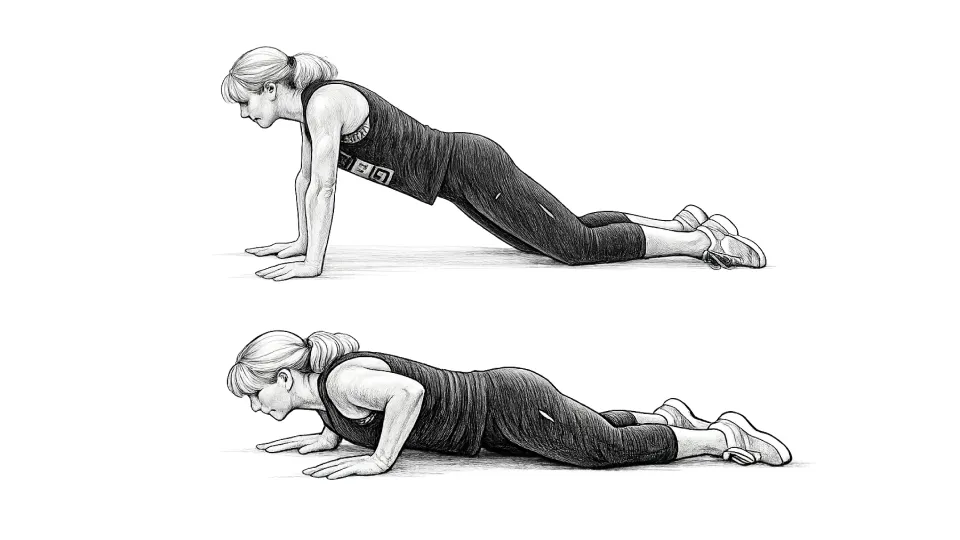
If you want to perform push-ups perfectly, here are the four key things to keep front of mind:
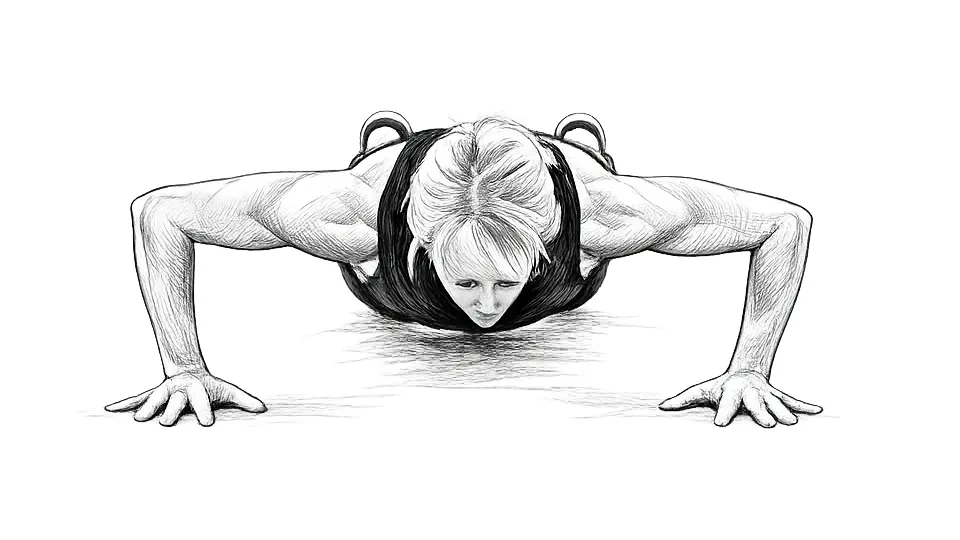
1) Position hands wider than shoulders.
2) Lower chest to elbow level
3) Lower body in one strong unit
4) Brace your core and squeeze your glutes
Push-ups versus bench press
During the study researchers also compared push-ups with another chest training favorite, the bench press.Study participants experienced 51 percent more activation of the abdominal muscles when completing push-ups versus bench press repetitions with parallel weight. This highlights how push-ups are the superior functional exercise.
Functional exercises typically involve the integrated training of limb muscles with core muscles and are hugely valuable when it comes to training muscles to do everyday activities safely and efficiently.
There's no dispute that the most effective push-ups are push-ups on your toes, as they engage a greater amount of activation in the muscles of the upper body and core – demanding whole-body integration. However, push-ups on your toes can be pretty challenging and many people, especially older adults or individuals new to exercise, cannot safely complete multiple push-ups on their toes. All too often the hips and neck are not aligned properly and consequently, the risk of injury outweighs the rewards. "When people are struggling to lower themselves towards the ground in a toe push-up position, they shouldn't give up or feel discouraged, says Gottschall. "We can now be confident that push-ups on your knees are an effective modification."
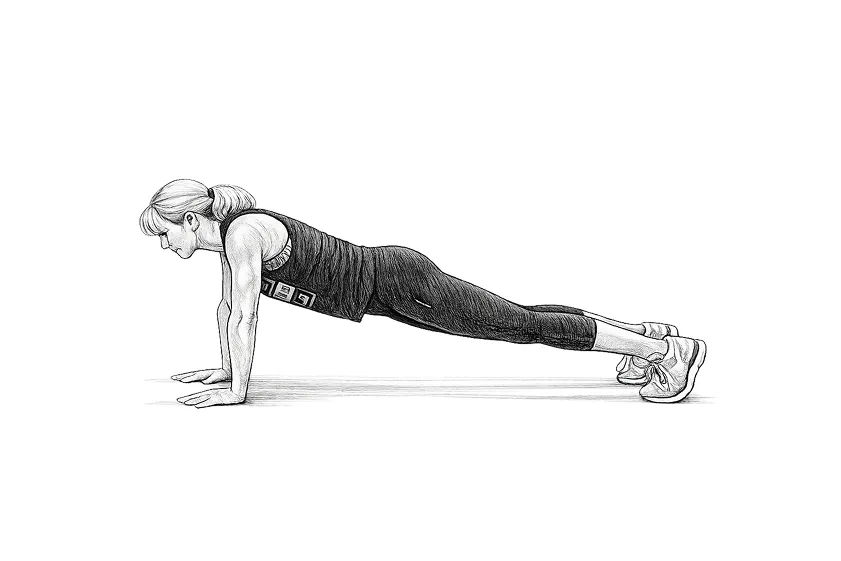
How to progress from knee push-ups to toe push-ups
The good news is that if you do enough push-ups on your knees, you can progress to push-ups on your toes in no time. Gottschall explains that as the muscle activation in knee and toe push-ups is the same, if you consistently perform enough push-ups on your knees to reach a point of fatigue you'll soon become strong enough to do push-ups on your toes.
Bryce Hastings, Les Mills’ Head of Research and TechnicalAdvisor agrees with Gottschall’s advice, saying once people are confident doing16 push-ups on their knees, then they're ready to try push-ups on their toes.
“If you feel confident doing 16 knee push-ups, you can just start to try some on your toes and see how you feel. If you need to, you can revert back to the other style until you gradually build up your strength overtime to be able to do more on your toes than your knees,” he says.
TRY THE 16-DAY PUSH-UP CHALLENGE
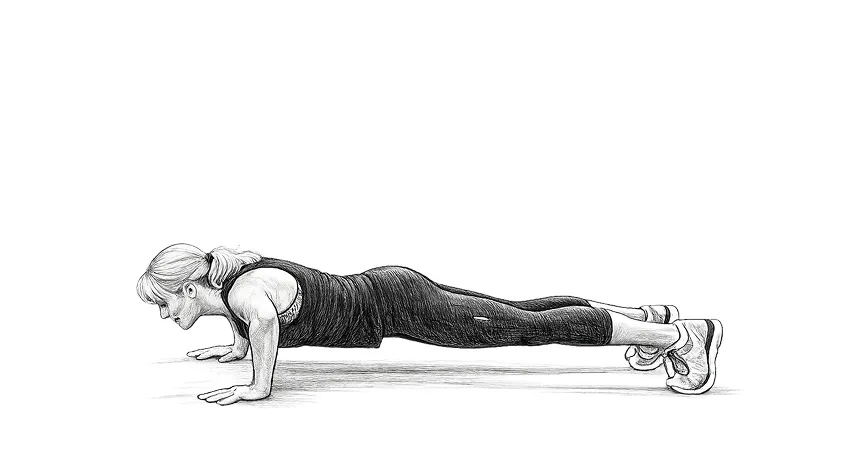
Once you’ve mastered the toe push-up the sky’s the limit.The Guinness world record for most push-ups in one hour is held by David Escojido who did 2,298 push-ups in 60 minutes. Charles Servizio holds thecurrent world record for most push-ups in 24 hours. He ticked off a whopping46,001 push-ups in just 21 hours, 6 minutes.
Workouts like BODYPUMP™, LES MILLS GRIT™, LES MILLS CORE™ and BODYATTACK™ typically feature push-up variations. You can find a class near you or work out On Demand.

This challenge was designed by Jinger Gottschall, PhD, an Associate Professor at Penn State University. Gottschall has led numerous studies into the effectiveness of various exercise regimes and works closely with Bryce Hastings, Les Mills Head of Research, to test all sorts of exercise programming. When it comes to getting the best results from the time you spend working out, this woman knows the way to go.
@jingerfitness
Want more health and fitness advice?
Get monthly Fit Planet updates straight to your inbox.
Want more health and fitness advice?
More about the author
Emma Hogan
Emma is a health and fitness writer with 20 years of experience creating evidence-based features that bridge the gap between scientific research and real-world application. Based in New Zealand, she works with global exercise scientists, physiotherapists, and internationally recognized fitness experts to uncover the latest insights in health, fitness, and human performance.
Known for making complex topics accessible and engaging, Emma writes on everything from strength training and recovery to motivation, behavior change, and lifelong wellbeing. Her work helps readers navigate an increasingly crowded health landscape and make informed choices grounded in credible research rather than trends or misinformation.

Fit Planet
Home exercise hacks: The tips home exercisers swear by

Fit Planet
Why exercise fights depression: scientists uncover how muscles talk to the brain

Fit Planet
Exercise for mental health: What the research says about feeling happier, healthier, and more resilient
Fit Planet
How to become a group fitness Instructor: A step-by-step guide

Fit Planet
Why music makes exercise feel easier, more enjoyable, and more effective

Fit Planet
Are you eating enough to support your workouts? 7 signs you're under-fueling your training
Fit Planet
10 signs you'd make a great group fitness Instructor
Fit Planet
Does exercise help you lose weight? What the science really says
Fit Planet
How much strength training do you need to live longer? Scientists say 90-120 minutes per week
Fit Planet
Should you change your workouts based on your menstrual cycle?
Fit Planet
When is the best time to exercise? Morning vs evening workouts explained

Fit Planet