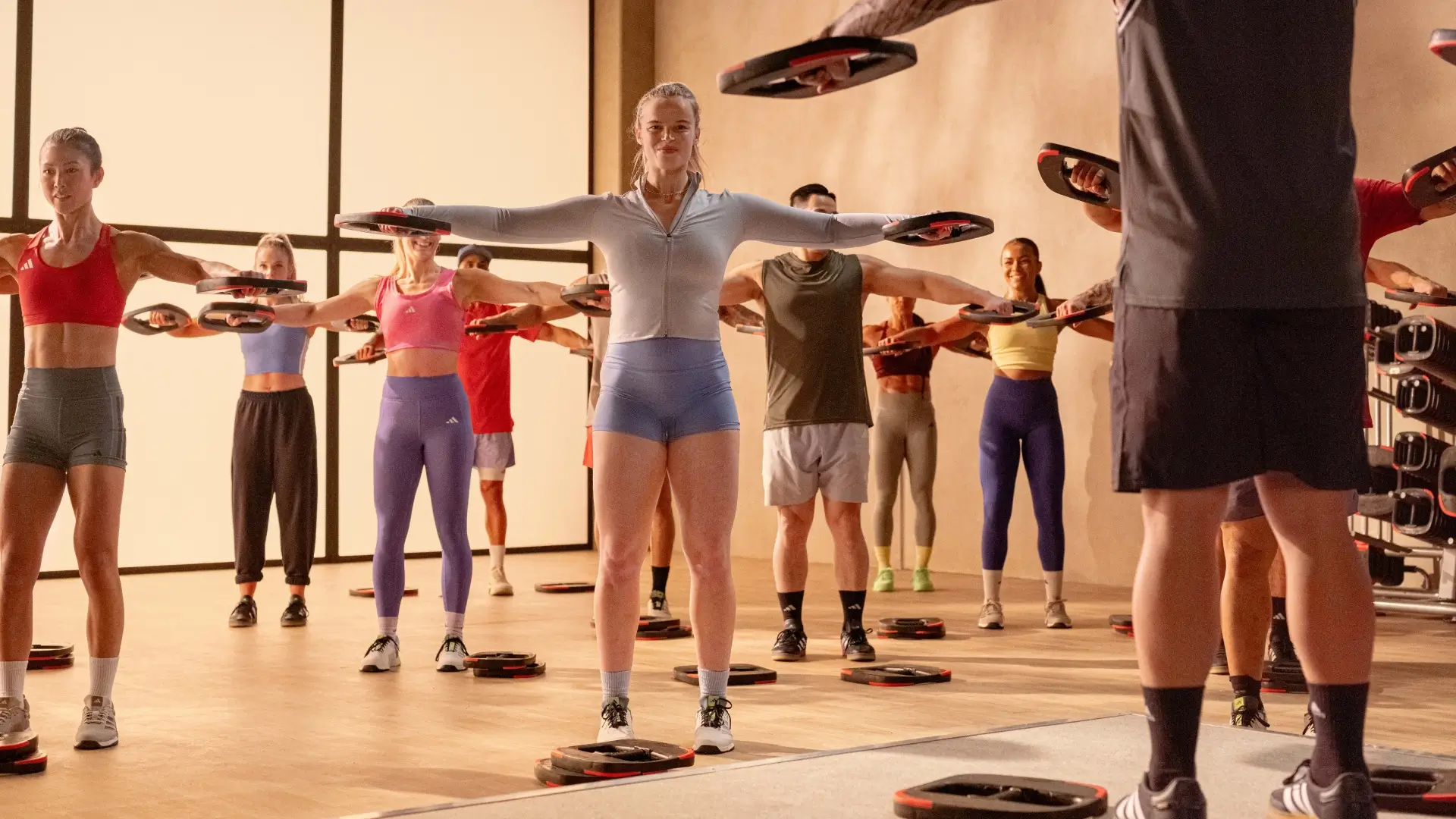
Squat load and depth in BODYPUMP
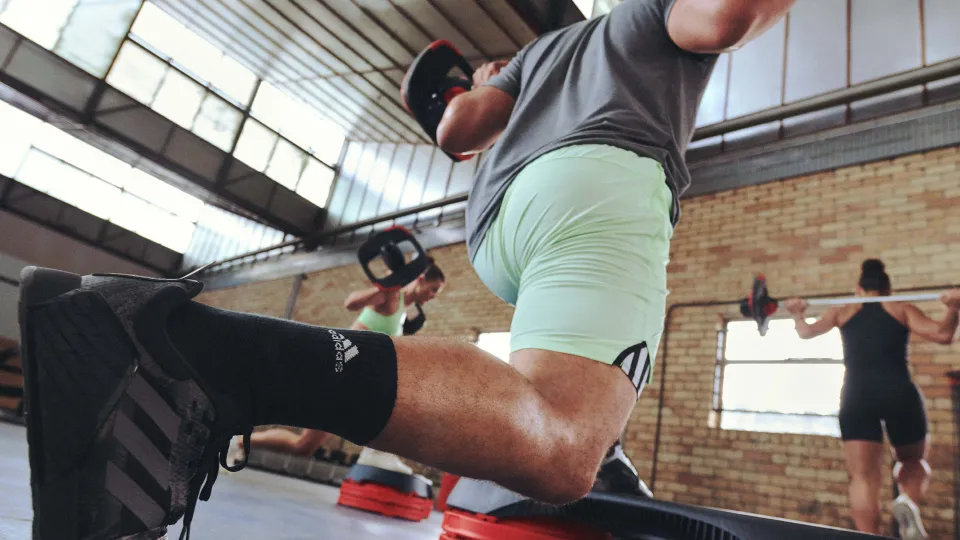
Squat training in BODYPUMP™ has two key variables: depth and load. This study looked at the effect of these parameters on muscle activation in the lower limb during a typical BODYPUMP squat condition. Depth of squatting had a significant effect on average and peak activity of the quadriceps and gluteus maximus, and peak activity of biceps femoris and lateral gastrocnemius. The effect of load was significant for mean and peak activity of gluteus maximus and lateral gastrocnemius.
Introduction
Squat training in BODYPUMP™ has two key variables: depth and load. This study looked at the effect of these parameters on muscle activation in the lower limb during a typical BODYPUMP squat condition.
A greater understanding of the effects of squat load and depth will help instructors coach participants to execute their squat track in a way that maximizes effectiveness.
Hypothesis
The aim of this study was to establish the effect of squat load and squat depth on the EMG activity of vastus lateralis, gluteus maximus, biceps femoris and lateral gastrocnemius in BODYPUMP participants.
Method
Ten female BODYPUMP participants (age 41 ± 9 years) performed 1 set of 7 squats under four conditions, representing every combination of two depths (90° knee angle and 125° knee angle) and two loads (23% bodyweight and 38% bodyweight).
EMG readings were collected from the quadriceps (vastus lateralis), gluteus maximus, hamstrings (biceps femoris) and calf muscles (lateral gastrocnemius).
Results
Depth of squatting had a significant effect on mean and peak activity of the quadriceps and gluteus maximus, and peak activity of biceps femoris and lateral gastrocnemius. More Les Mills Lab: The Effect of Squat Load and Depth in BODYPUMP specifically, activity of quads and glutes is greater in a 90° (deeper) squat than in a 125° (shallower) squat. Mean activity of vastus lateralis was 1.3–1.4 times greater at 90° than at 125°. Peak activity was 1.8–1.9 fold greater at 90°.
The effect of load was significant for mean and peak activity of gluteus maximus and lateral gastrocnemius.
Conclusion
BODYPUMP is a high repetition, low weight, resistance training class which is popular across a wide range of participants, many of whom do not participate in any other types of strength training. The effectiveness of the class is dependent on reaching a state of fatigue at the end of each track. The squat track is the major focus for the legs. Participants are encouraged to select a weight and adopt a range of motion that will significantly challenge the target muscles (glutes and quads).
This investigation highlights the importance of weight selection and range which combine to increase muscle activation and ultimately generate a fatigued state in the target muscle groups. It is this level of fatigue that determines the physiological response to the class. Instructors can be confident that encouraging a challenging weight selection and coaching full range squats will significantly increase the likelihood of delivering the changes of improved strength and developing lean muscle mass that people seek when coming to class.
Read the full article.
Read the full article.
More about the author
Bryce Hastings
Bryce Hastings drives the science behind the sweat, leading world class research that shapes how millions of people train. Working alongside internationally renowned research partners, Bryce bridges the gap between the lab and the gym floor, ensuring every LES MILLS™ program is safe, effective, and powered by science.
He has developed numerous research programs and co authored reports across a range of fitness and scientific publications. These include the landmark Get Fit Together trial, alongside research into core conditioning, high intensity interval training, and exercise strategies for sedentary individuals.
A certified Physical Therapist since 1986, Bryce’s academic work is supported by extensive hands on experience. He owned a private practice within the original Les Mills World of Fitness in Auckland and holds an Advanced Diploma in Manipulative Therapy and a Master of Philosophy from Auckland University of Technology, where he serves as a Research Associate and lectured part time for eight years.



_(10)_HR%20Darbyshire%202000x1039%20no%20exp%20v2.webp)
.webp)

Research