THE POWER OF PULSES
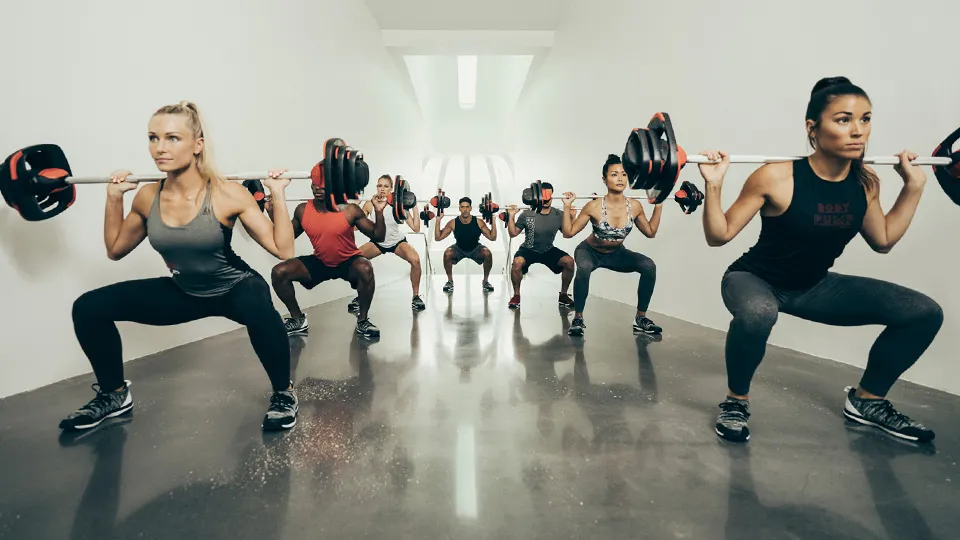
If you want strong, lean and toned muscles it’s the littlest movements that can make a real difference. Check out these new insights from the Les Mills Lab to find out how small movements can create big change.
We’ve long known that when it comes to resistance training it’s fatigue, not load, that generates change within the muscle – and there’s plenty of research to back it up. We also know that maximizing fatigue comes down to manipulating range of movement and repetition speed. New insights now clearly show that pulses are a great way to maximize fatigue when lifting light weights for higher repetitions.
What do pulses do that full-range exercises don’t?
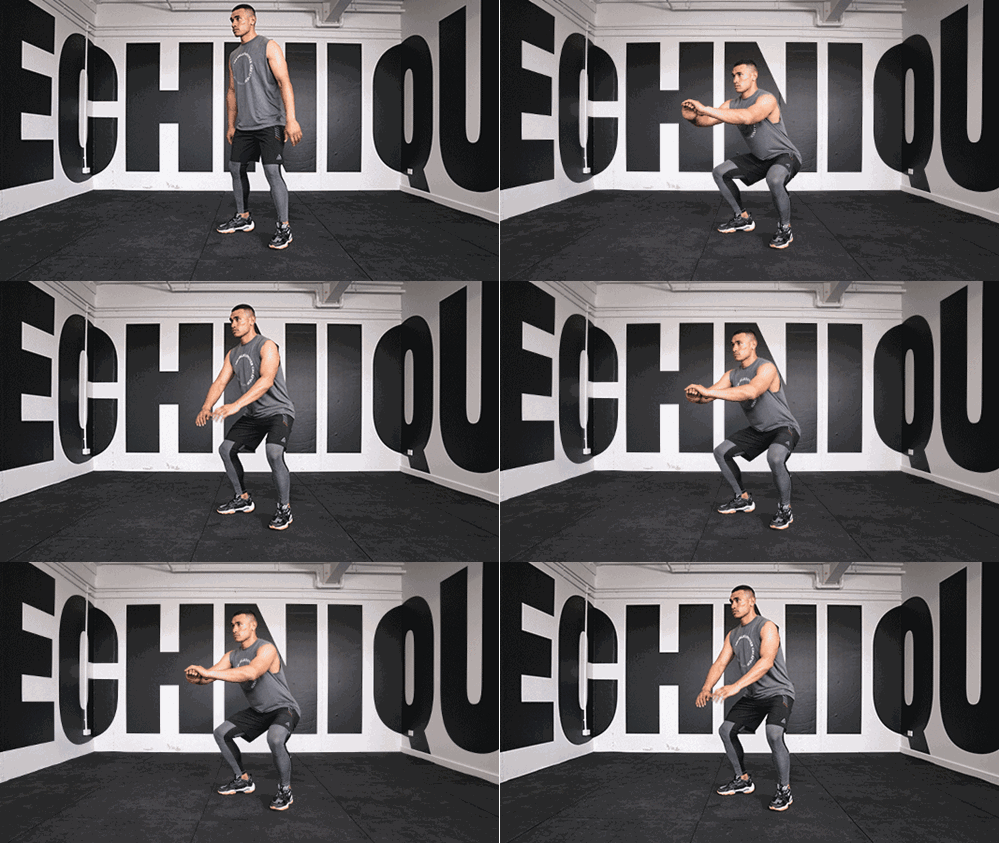
Working with Dr Jinger Gottschall we set out to measure the difference in muscle activation between full-range squats and squat pulses.
Here’s what we found:
Full-range squats, as you’d expect, fire up all the global muscles that drive your body away from the ground. This highlights how full-range squats are great for working the glute max, rectus femoris and the hamstrings.
What we see with squat pulses is a more isolated activation of the quadriceps muscles closer to the knee. The activation of these muscles is key for stabilization.
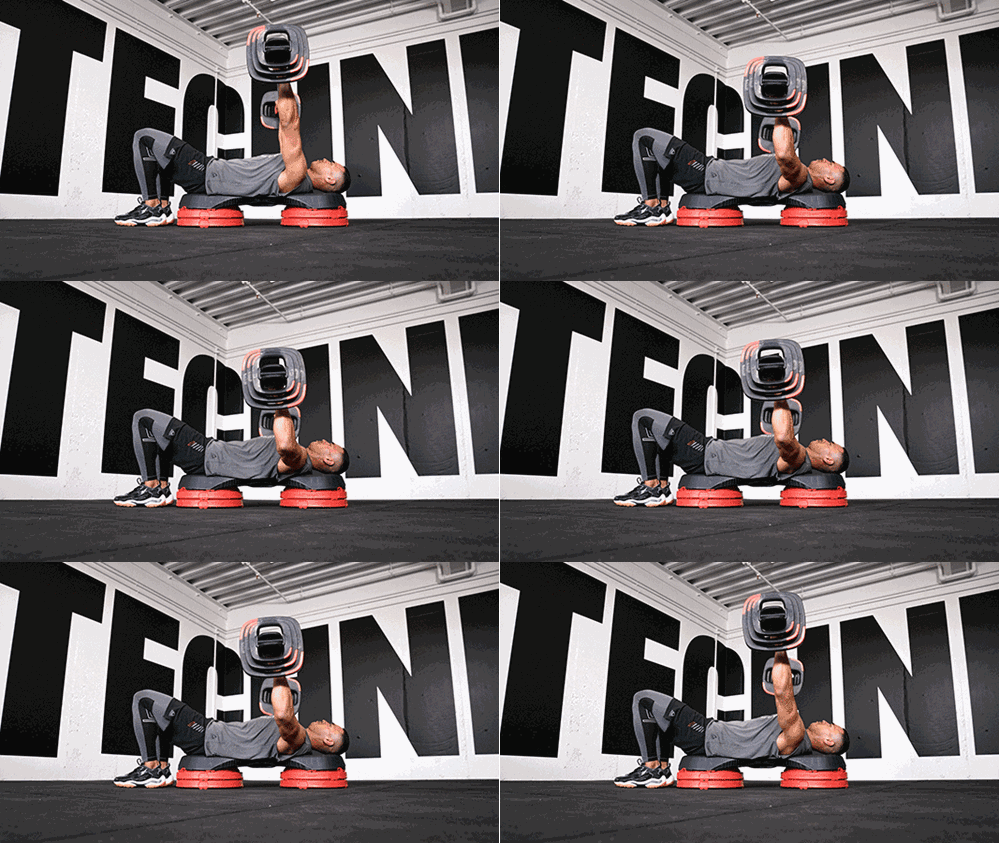
We see a similar pattern when comparing the activation levels of the key muscles involved in a full-range chest press with pulses.
This is what we found:
Again the full-range chest presses resulted in activation of the key push pattern muscle groups, the pec major and anterior deltoid. As soon as we introduced a pulse action we saw a significant increase in the activation of lat dorsi, again acting as a stabilizer.
IN SUMMARY
These findings highlight how combining pulses with full-range exercises changes activation patterns and allows you to engage all the key target muscles. This is the secret to maximizing fatigue and driving muscle change.
What’s the difference between a pulse and a bottom half?
If you’re a BODYPUMP regular you’ve probably very familiar with both the terms “pulses” and “bottom halves”. Both movements are designed to help maximizing fatigue by manipulating range of movement, yet there are slight differences. Pulses are much smaller in amplitude and involve moving just a few inches above and below the point of maximum tension (e.g. bottom of a squat or mid point of a bicep curl). Bottom halves work a larger range from halfway up to the bottom of the movement.

Bryce Hastings is a leading New Zealand physiotherapist and fitness expert. As Les Mills Head of Research he leads research into the most effective approaches to exercise and plays a pivotal role in structuring all LES MILLS™ workouts. Bryce’s passion for effective exercise is born from spending 30 years in physiotherapy, where he saw “people getting their lives wrong” every day and felt like he was acting as an ambulance at the bottom of the cliff. By working in fitness he gets to be the fence at the top.
If you want more health and fitness inspiration simply sign up to Fit Planet and get the freshest insights and advice straight to your inbox.
More about the author
Emma Hogan
Emma is a health and fitness writer with 20 years of experience creating evidence-based features that bridge the gap between scientific research and real-world application. Based in New Zealand, she works with global exercise scientists, physiotherapists, and internationally recognized fitness experts to uncover the latest insights in health, fitness, and human performance.
Known for making complex topics accessible and engaging, Emma writes on everything from strength training and recovery to motivation, behavior change, and lifelong wellbeing. Her work helps readers navigate an increasingly crowded health landscape and make informed choices grounded in credible research rather than trends or misinformation.

Fit Planet
Home exercise hacks: The tips home exercisers swear by
Fit Planet
Why exercise fights depression: scientists uncover how muscles talk to the brain

Fit Planet
Exercise for mental health: What the research says about feeling happier, healthier, and more resilient
Fit Planet
How to become a group fitness Instructor: A step-by-step guide
Fit Planet
Why music makes exercise feel easier, more enjoyable, and more effective

Fit Planet
Are you eating enough to support your workouts? 7 signs you're under-fueling your training
Fit Planet
10 signs you'd make a great group fitness Instructor
Fit Planet
Does exercise help you lose weight? What the science really says
Fit Planet
How much strength training do you need to live longer? Scientists say 90-120 minutes per week
Fit Planet
Should you change your workouts based on your menstrual cycle?
Fit Planet
When is the best time to exercise? Morning vs evening workouts explained
Fit Planet