High performance mindset: what we can learn from elite athletes
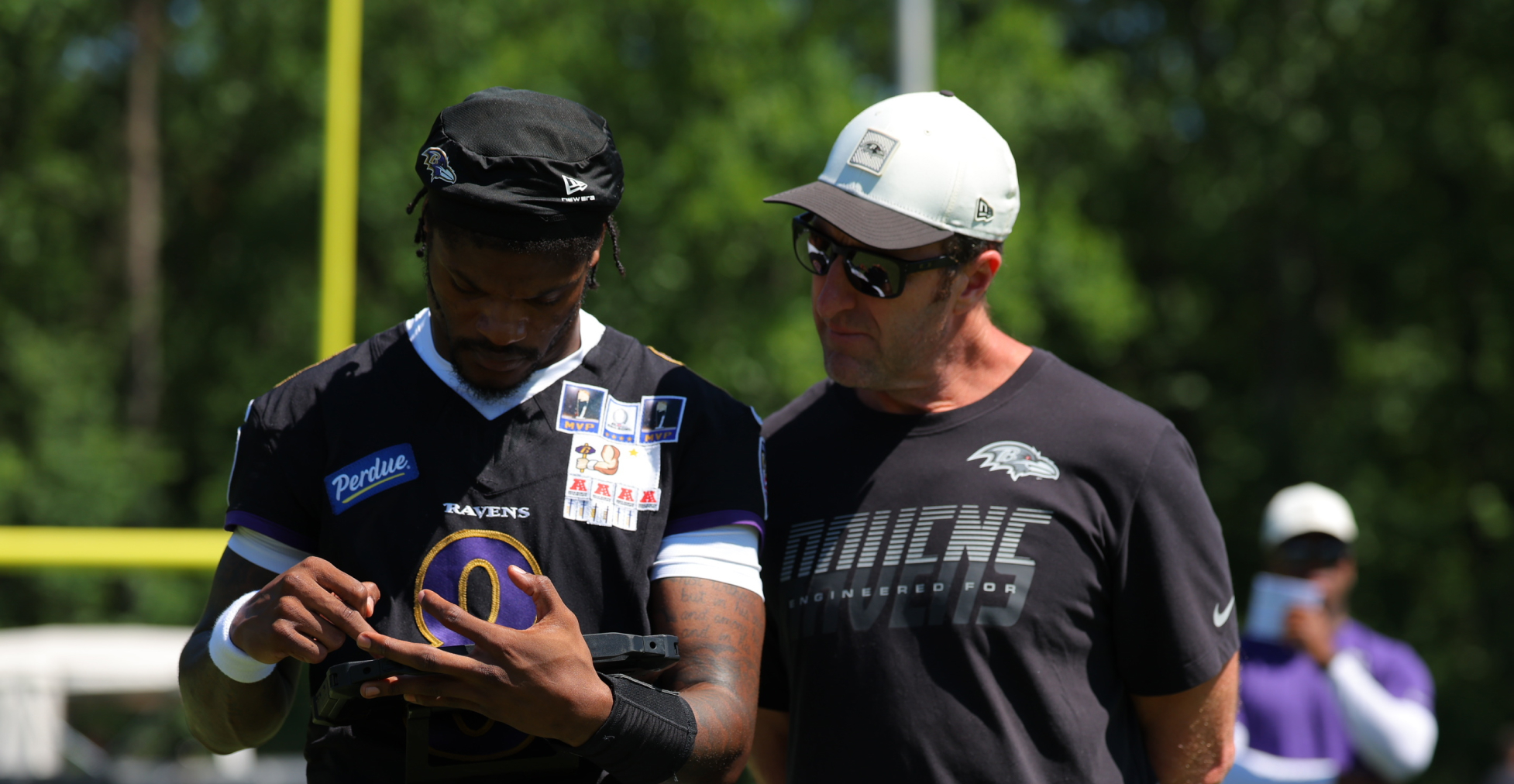
Whether you're training for HYROX, chasing a running goal, building strength, or simply trying to get more from your workouts, there's plenty to learn from people who make performance their profession.
Elite athletes aren't successful because they have more motivation. They're successful because they've built the habits, discipline, and mindset to stay consistent when motivation runs dry.
Few people understand this better than Dr Nic Gill. From Head of Health and Performance for the New Zealand All Blacks rugby team and now as Vice President of Health and Performance for the Baltimore Ravens, he's spent decades helping elite athletes reach their potential. We recently spoke to Gill to uncover the simple performance habits that pay the biggest dividends.
Key takeaways: Dr Nic Gill's high-performance mindset principles
Want to develop a high-performance mindset? Start here:
- Focus on discipline and consistency over motivation.
- Create structure and plan your training in advance.
- Set goals that are challenging enough to create accountability.
- Trust your body's ability to adapt and improve over time.
- Prioritize recovery as much as training.
- Pay attention to nutrition and sleep.
- Treat plateaus as feedback, not failure.
- Adapt your plan when obstacles arise rather than abandoning it altogether.
What does a high-performance mindset actually look like?
Nic: “A high-performance mindset is being willing to sacrifice, being disciplined, creating habits of consistency, and doing the little things really, really well instead of chasing miracle fixes.
When I think about the most successful athletes I've worked with, that's the common thread. It's discipline. It's sacrifice. It's consistency. It's doing the simple things better than anyone else.
A lot of people think high performers are motivated all the time, but that hasn't been my experience at all. Motivation comes and goes. What separates the best athletes is that they don't rely on it. They never shy away from doing what needs to be done.”

Can anyone develop a high-performance mindset, or is it something you're born with?
Nic: “I think it can absolutely be learned. Some people may naturally have more drive than others, but mindset can be coached and developed. The important thing is learning how and when to apply it.
Take Olympic athletes. They spend four years building toward a single event. They can't operate at maximum intensity every day. It's the same for rugby players who learn to manage the demands of a long season while still being at their best when the biggest moments arrive.
The best athletes understand when it's time to push hard, when it's time to recover, and when it's time to build patiently toward a larger goal.
That's something everyday exercisers can learn from. High performance isn't about going hard every day. It's about understanding what's required today to help you achieve your long-term goal.”
What's the biggest lesson recreational exercisers can learn from elite athletes?
Nic: “Most people lack structure and detail. Athletes have rigid structures and routines.
The reality is that if you’re exercising regularly, you already have your mindset pretty right. You know exercise is good. What's often missing is a plan.
The best athletes plan their week. They know exactly what each session is designed to achieve. They don't wake up and decide whether they're going to train or what they're going to do. That decision has already been made.
The more structure you create around your training, the easier it becomes to stay consistent. And consistency is where results come from.”

How important is goal setting?
Nic: “Goals are huge because they create accountability. But they only really work when they're challenging enough to matter to you.
For more than 20 years, I had a goal of getting faster at Ironman. That goal drove me every day. It made me more disciplined, and drove me to make sacrifices. A big part of what motivated me was telling people about it. Once I'd verbalized the goal, there was an expectation there. I wanted to prove to myself, and to others, that I could achieve it.
Having a goal like that gives you a reason to get up when it's cold, dark, and inconvenient. If it's something you genuinely want to achieve, you're far less likely to hit the snooze button when the alarm goes off.
Interestingly, I'm going through a period now where I don't have a major goal, and it’s a struggle! I’m experiencing first-hand how much harder it is to create structure and accountability when you don't have a goal.”
What do most people underestimate about their own potential?
Nic: “The human body is incredible in what it can achieve. I think most people underestimate what we can throw at it and how quickly it can adapt, improve, and change – provided we're consistent.
People often expect results immediately. Athletes understand that's not how adaptation works. The body needs time. Progress comes from repeatedly applying the right stimulus and trusting the process.
Most people are capable of much more than they think they are. The challenge is staying patient long enough to discover what you're capable of.”

How do you push your limits but avoid burnout?
Nic: “You need a plan. You need training days, recovery days, lower-intensity days, and periods where you're deliberately looking after yourself. If you build recovery into your structure, you're far less likely to burn out.
Take HYROX training as an example. There's high-intensity running, high-intensity functional fitness, and a significant physical load on the body. To support that, you also need lower-intensity aerobic work, mobility work, flexibility training, and recovery practices that keep you healthy.
The people who stay healthy aren't always the people training the hardest. They're the people balancing hard work with smart recovery.
I'm a big believer in having at least one day a week where you step away from structured training. That's time for your body and your mind to recover.”
What role does recovery play in a high-performance mindset?
Nic: “Recovery is one of the biggest lessons everyday exercisers can learn from elite athletes.
A lot of people focus solely on the training. Athletes focus just as much on recovery because that's where adaptation actually happens.
What's important to understand is that recovery doesn't mean doing nothing. A recovery day might involve mobility work, stretching, walking, extra sleep, hydration, or simply reducing your training load.
Recovery isn't taking away from your goal. Recovery is helping you achieve your goal.”
Do your recovery needs change as you get older?
Nic: “Absolutely. When you're in your early twenties, you can get away with almost anything. You're almost indestructible. You bounce back quickly, and you don't think much about sleep, nutrition, or recovery. Then every five years or so, things change … From 25 to 30, you need to be a little smarter. From 30 to 35, smarter again. By the time you get into your forties and fifties, there's more recovery than work being done!
One of the biggest lessons people can learn from elite athletes is the importance of looking after their body for the long term. You have to pay more attention to sleep, nutrition, stress management, mobility, and how much training load you're carrying.”

What's one thing athletes understand about health that the average person often misses?
Nic: “That what happens outside training is just as important as what happens during training.
I really believe the saying "you can't out-train a bad diet" rings true. Nutrition is crucial. In many cases, it's just as important as the exercise itself if you're trying to make progress.
The same applies to sleep. People consistently underestimate the impact of good-quality sleep on performance, recovery, energy, and overall health. I'm also a huge believer in naps. The power of a short nap can do wonders.
If you're investing time into training, you should be investing just as much attention into recovery.”
What should people do when they hit a plateau?
Nic: “If there hasn't been a change or an improvement, ask yourself why. Too often, people assume the answer is to train harder. Sometimes that's true, but often it isn't. Maybe you're not recovering enough. Maybe your sleep has deteriorated. Maybe work stress is affecting your training. Maybe the program isn't providing the right stimulus.
The best approach is to step back, look at the data, track what you're doing, and understand what's really happening. Plateaus are feedback. They're information you can learn from.”
What's the most valuable mindset shift people can make?
Nic: “The best athletes adapt and adjust. They find a way around whatever challenge is put in front of them. If they're injured, they modify the plan. If they're short on time, they shorten the session. If they're tired, they adjust the intensity.
Some people say: ‘I don't have time for my one-hour workout, so I'll skip it.’
The best athletes say: ‘I've got 30 minutes, so I'll make those 30 minutes count.’”
What's your number one piece of advice for anyone wanting to build a high-performance mindset?
Nic: “Focus on consistency. We spend a lot of time looking for the perfect training plan, the perfect diet, or the perfect recovery strategy. In reality, most progress comes from doing the basics well, over and over again.
The athletes who achieve the most aren't necessarily the most talented. They're the ones who stay disciplined long enough for the process to work.
Do the simple things well. Do them consistently. Be patient.”
The bottom line
Elite athletes aren't successful because they're motivated every day. They're successful because they've built systems, habits, and routines that allow them to keep moving forward, even when motivation isn't there.
For everyday exercisers, that's perhaps the most valuable lesson of all: stop chasing perfect and start chasing consistent. Over time, those small actions add up to extraordinary results.
Want to learn more from Dr. Nic Gill? Read his advice on how to successfully manage training load.
You can also follow Nic Gill on Instagram and learn more about his work at www.nicgill.com.
Want more health and fitness insights?
Get monthly Fit Planet updates straight to your inbox.
Want more health and fitness insights?
More about the author
Emma Hogan
Emma is a health and fitness writer with 20 years of experience creating evidence-based features that bridge the gap between scientific research and real-world application. Based in New Zealand, she works with global exercise scientists, physiotherapists, and internationally recognized fitness experts to uncover the latest insights in health, fitness, and human performance.
Known for making complex topics accessible and engaging, Emma writes on everything from strength training and recovery to motivation, behavior change, and lifelong wellbeing. Her work helps readers navigate an increasingly crowded health landscape and make informed choices grounded in credible research rather than trends or misinformation.

Fit Planet
High performance mindset: what we can learn from elite athletes

Fit Planet
Home exercise hacks: The tips home exercisers swear by

Fit Planet
Why exercise fights depression: scientists uncover how muscles talk to the brain
Fit Planet
How to become a group fitness Instructor: A step-by-step guide

Fit Planet
Why music makes exercise feel easier, more enjoyable, and more effective

Fit Planet
10 signs you'd make a great group fitness Instructor
Fit Planet
Does exercise help you lose weight? What the science really says
Fit Planet
When is the best time to exercise? Morning vs evening workouts explained

Fit Planet
What is CEREMONY HYROX? A complete guide to the new Les Mills x HYROX workouts
Fit Planet
Can teaching group fitness fit around your day job?


Fit Planet