How to inspire fitness without saying a single naggy word

Getting someone you care about moving more is rarely a motivation problem. It’s a psychology problem. With these 5 strategies, you can help get loved ones on track.
Most people know exercise is good for them. The barrier is not awareness, it’s emotion: fear of feeling out of place, past bad experiences, low confidence, or the belief that they have already fallen too far behind to start. That’s why lectures about health, step counts, or ‘just coming with me once’ tend to backfire.
But there is good news. Fitness habits are highly contagious. Research consistently shows that our closest relationships are one of the strongest drivers of behaviour change, especially when it comes to movement. If you’re physically active, your partner is five times more likely to become physically active too. So, simply sustaining your fitness routine will mean there’s a good chance they’ll follow suit.
In other words, you already have influence, whether you mean to or not.
The key is how you use it. Pushing, persuading, or policing rarely works. But when fitness is framed as something shared, enjoyable, and flexible, it becomes far easier for others to step in without resistance.

If you’re physically active, your partner is five times more likely to become physically active too.
Below are five evidence‑backed strategies used by exercise professionals to help motivate loved ones in a way that builds confidence, not pressure, and supports long‑term change.
Strategy #1 Be a savvy role model
Demonstrate consistency by scheduling gym classes or home workouts, going for daily walks and spending time doing weekly meal prep. And what’s just as important – approach these tasks with joy and positivity. Anna Szymanski, an ACE Certified Health Coach, Personal Trainer and Group Fitness Instructor say positioning is key and that you can engage others without being too pushy. “There are two ways to present options – it can either be inviting or off-putting and cause tension.” Szymanski suggests offering reflections as part of the conversation around healthy behaviors. For example, during meal prep, saying: “I always feel so much better when I do this. It takes a little planning and effort, but it will be worth it when I’m set up for a week of healthy eating,” is a lot more impactful than telling a spouse day after day: “We need to start eating healthier dinners.”
Strategy #2 Share plenty of ideas and opportunities
Exercise doesn't need to involve a treadmill or piece of fitness equipment, says Dr. Deidre Douglas, fitness educator, trainer and LES MILLS Coach. “You can choose creative and fun activities that can be done together, such as walking, biking, dancing, a simple throw and catch game, or maybe a 15-minute movement challenge.” She recommends varying your suggestions and being sure to make time for these activities, always texting a courtesy reminder and never canceling fitness dates.
Strategy #3 Aim for small incremental change
Niki Campbell, an ACE Certified Personal Trainer and Health Coach, says that announcing global changes – ‘We’re all vegan now!’ – is never going to work. Instead, focus on telling your loved ones small steps like you’re going to reduce the amount of soda in the house to encourage everyone to drink more water. Patience here is key. Just because you’ve made up your mind that it’s time to change, that doesn’t mean others are totally on board. Create awareness of what you’re trying to accomplish and give time for others to adjust. Dr. Douglas says another option is to create a habit tracker, so for each exercise session you track it and celebrate. “It's the little things done daily with recognition that keep people motivated and engaged.”
Strategy #4 Be flexible
When it comes to new routines, a ‘my way or the highway’ approach will never fly. As any personal trainer or coach will tell you, you need to be flexible and understand different preferences and priorities. Amber Long, an ACE Certified Personal Trainer, Health Coach, Group Fitness Instructor and Medical Exercise Specialist, says that if a family member is reluctant to exercise, you need to explore ways to get them involved that are more interesting or exciting. While you may enjoy going to the gym five days a week, your partner might prefer outdoor exercise. In this case, going for a weekend hike or having a friendly game of tennis, even if it’s not your preferred exercise modality, can be key to bringing others on board.
Strategy #5 Dish out the compliments
“Compliments are incredibly motivating, so shower people with them,” says Dr. Douglas. “Everyone loves a little encouragement. It’s always a smart move to offer a compliment when your significant other exercises.”
Why training with your loved ones is good for you
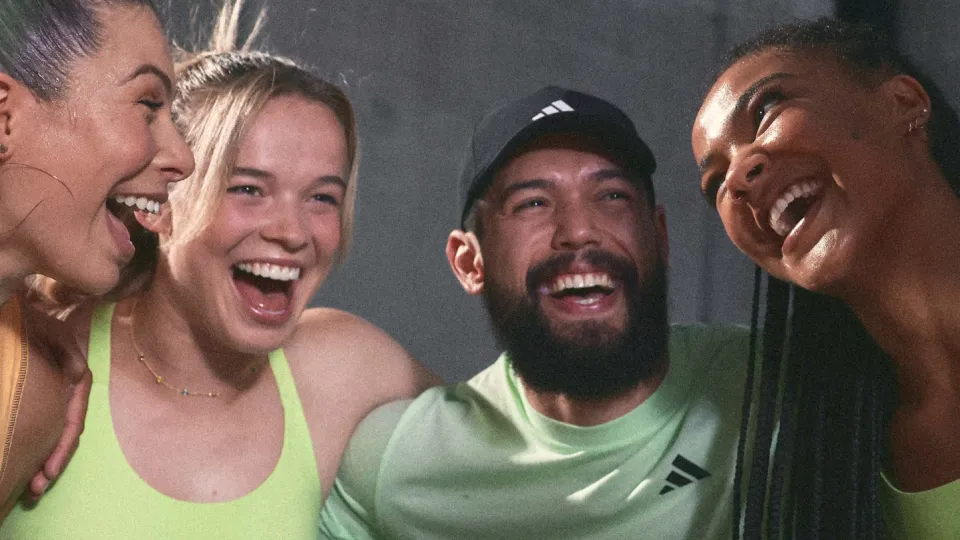
Training together is often summed up in the well‑worn phrase ‘couples who work out together, stay together’. But any credible evidence linking partner workouts and long-term relationships is thin on the ground. What is clear is that exercising alongside a partner, friend, or family member offers a wealth of other benefits. Research shows that when you work out with others you’re likely to train at a greater intensity and find it more enjoyable, which improves exercise adherence. One study tracking exercising couples found that on days partners worked out together, they reported greater positive emotion during exercise and higher overall relationship satisfaction compared to days they trained alone.
Training partners: What makes the perfect match
Science shows exercisers are more motivated by working out with someone who is fitter than they are, but who understands the power of silence.
A study of 115 exercisers holding planks for as long as possible, indicated that those who exercise with someone who is slightly better and stays silent, are likely to exercise for longer than if conditions were the same but that person was verbally encouraging them. Study author Brandon C Irwin explains: “If two individuals are exercising together and one is constantly saying ‘you can do this’ to the other, it may be taken as patronizing. Those who received encouragement may have felt condescended [to].”
So keep this front of mind while training with your partner. You might think serving up motivation and advice is helpful, but your partner probably doesn't want to be bossed around. If they've made the move to join you in exercise, try and make it as enjoyable as possible and resist the urge to push too hard.
Group exercise, either live or streamed, is a great way to work out with your loved ones. With an Instructor there to guide you, there’s no need for you to ‘take control’ of the workout and boss anyone around – all you need to do is follow the Instructor. “Group classes are a great way to introduce people to the culture of being connected with like-minded people having fun,” adds Dr. Douglas.

If you’re a LES MILLS+ subscriber you can now invite friends and family to try LES MILLS+ free for 30 days. When they subscribe you’ll receive 30 days credited to your account. And, the more friends who subscribe, the more you score! Get your referral code here.
Finally, if you haven’t already, encourage your friends and family to sign up to receive Fit Planet emails. Once a month they’ll receive helpful motivation and advice straight to their inbox.
More about the author
Emma Hogan
Emma is a health and fitness writer with 20 years of experience creating evidence-based features that bridge the gap between scientific research and real-world application. Based in New Zealand, she works with global exercise scientists, physiotherapists, and internationally recognized fitness experts to uncover the latest insights in health, fitness, and human performance.
Known for making complex topics accessible and engaging, Emma writes on everything from strength training and recovery to motivation, behavior change, and lifelong wellbeing. Her work helps readers navigate an increasingly crowded health landscape and make informed choices grounded in credible research rather than trends or misinformation.


Fit Planet
High performance mindset: what we can learn from elite athletes
Fit Planet
Home exercise hacks: The tips home exercisers swear by

Fit Planet
Why exercise fights depression: scientists uncover how muscles talk to the brain

Fit Planet
Exercise for mental health: What the research says about feeling happier, healthier, and more resilient
Fit Planet
How to become a group fitness Instructor: A step-by-step guide

Fit Planet
Why music makes exercise feel easier, more enjoyable, and more effective

Fit Planet
Are you eating enough to support your workouts? 7 signs you're under-fueling your training
Fit Planet
10 signs you'd make a great group fitness Instructor

Fit Planet
Does exercise help you lose weight? What the science really says

Fit Planet
How much strength training do you need to live longer? Scientists say 90-120 minutes per week

Fit Planet
Should you change your workouts based on your menstrual cycle?
Fit Planet