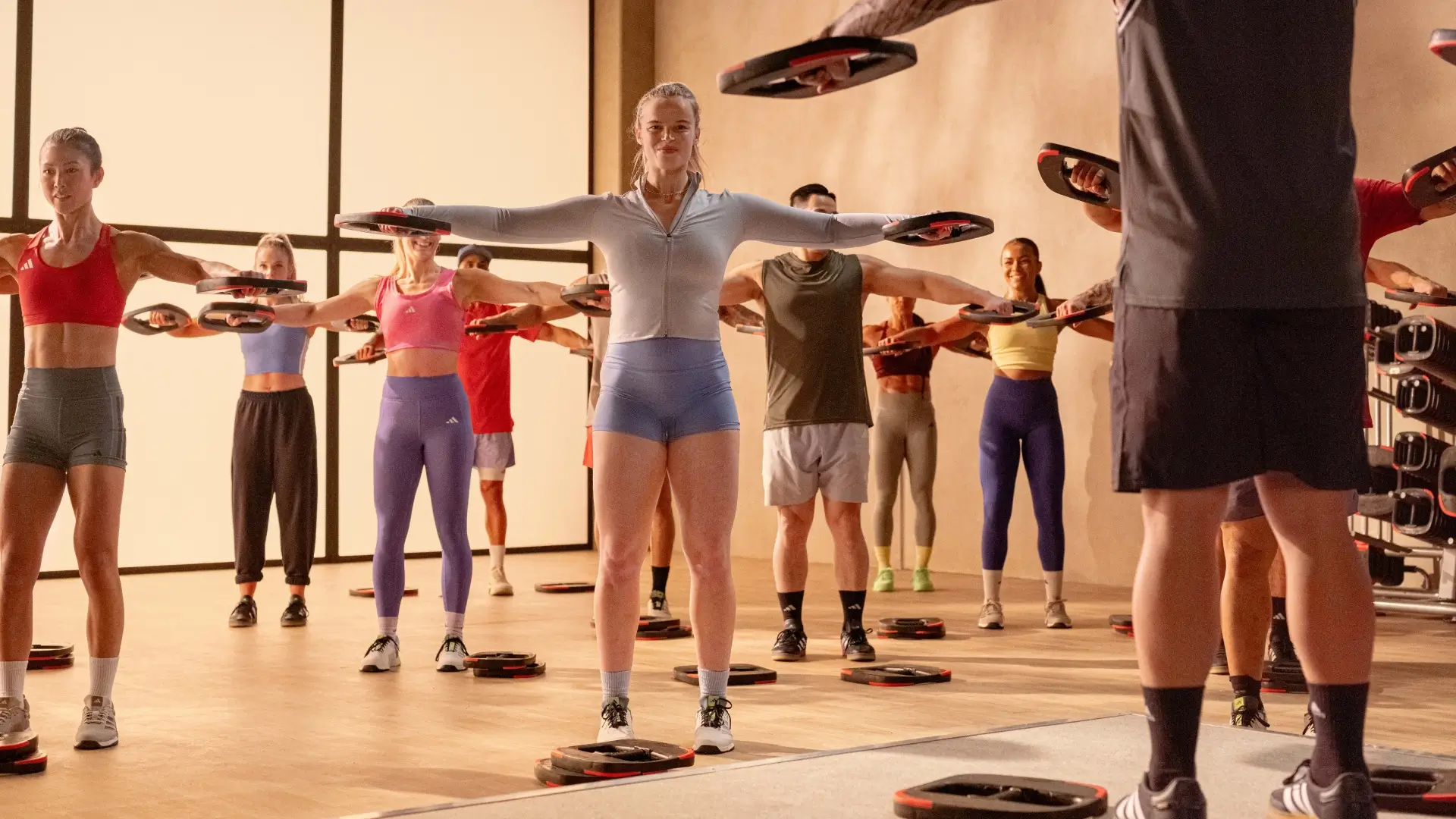
Social identity in group fitness
_(27)_HR%20Darbyshire%201920x1080%20no%20exp.webp)
This study demonstrates the importance of instructors creating a sense of “we” and “us” in group exercise classes. Instructors who are perceived as part of the ”in-group”, rather than being separated, are more likely to create higher levels of comfort in the class environment and ultimately positively influence attendance and effort.
Introduction
Group fitness instructors have the ability to enhance participants’ engagement in exercise via their leadership and coaching. Identifying the key elements that contribute to the effectiveness of this influence is of importance with regards to instructor training and development.
Hypothesis
Instructors who enhance member engagement by adopting a social identity leadership style (creating a sense of "us" and "we") will positively influence attendance, levels of comfort in the class environment and effort.
Method
249 participants (220 female) attending a variety of group exercise classes were asked to indicate their perceptions of the identity leadership (e.g. "this instructor creates a sense of "we" and "us" in the group exercise class") displayed by their group exercise instructor at two points over a four week period.
Levels of comfort in the environment, attendance and effort in class were also measured.
Results
Results demonstrated that the extent to which participants perceived their group exercise instructors to engage in identity leadership was positively associated with their own group identification and comfort in the exercise environment. Results further showed that members’ group identification and comfort were, in turn, positively associated with attendance over the four weeks and effort levels during class.
Conclusion
This study demonstrates the importance of instructors creating a sense of "we" and "us" in class. Instructors who are perceived as part of the "in-group", rather than seen as separate, are more likely to create higher levels of comfort in the class environment and ultimately positively influence attendance and effort.
Read the full article.
The full article is available
Read the full article.
More about the author
Bryce Hastings
Bryce Hastings drives the science behind the sweat, leading world class research that shapes how millions of people train. Working alongside internationally renowned research partners, Bryce bridges the gap between the lab and the gym floor, ensuring every LES MILLS™ program is safe, effective, and powered by science.
He has developed numerous research programs and co authored reports across a range of fitness and scientific publications. These include the landmark Get Fit Together trial, alongside research into core conditioning, high intensity interval training, and exercise strategies for sedentary individuals.
A certified Physical Therapist since 1986, Bryce’s academic work is supported by extensive hands on experience. He owned a private practice within the original Les Mills World of Fitness in Auckland and holds an Advanced Diploma in Manipulative Therapy and a Master of Philosophy from Auckland University of Technology, where he serves as a Research Associate and lectured part time for eight years.





_(10)_HR%20Darbyshire%202000x1039%20no%20exp%20v2.webp)
.webp)

Research