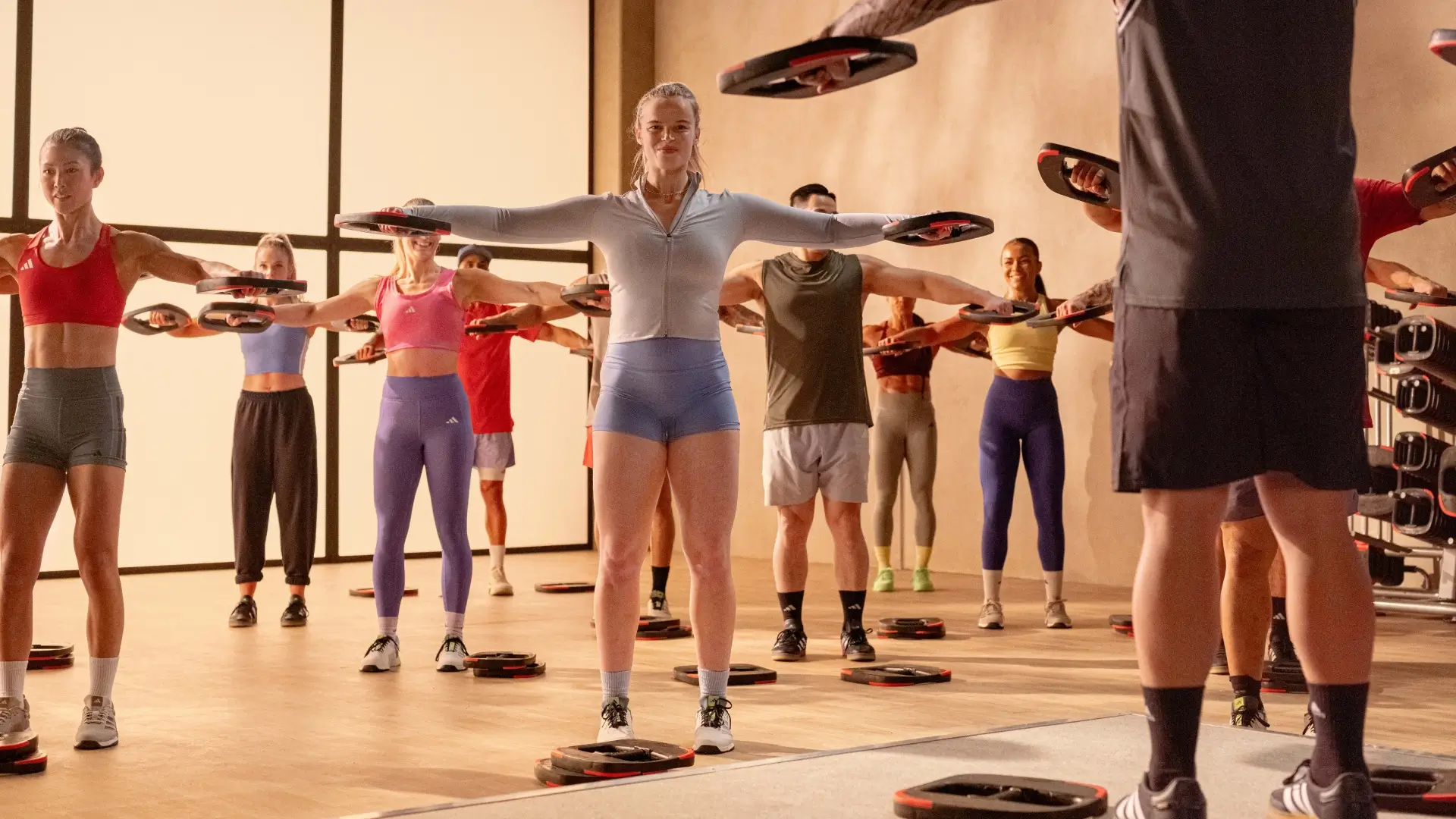
Les Mills Groupness Study

The Les Mills Lab team recently partnered with Penn State University’s Dr Blair Evans to further investigate the group effect.
Introduction
The Les Mills Lab team recently partnered with Penn State University’s Dr Blair Evans to further investigate the group effect.
Maximizing the group effect has long been recognised by Les Mills as a crucial ingredient for making its group fitness programs successful but the Les Mills Lab team wanted to take this one step further, this time putting groupness under the microscope.
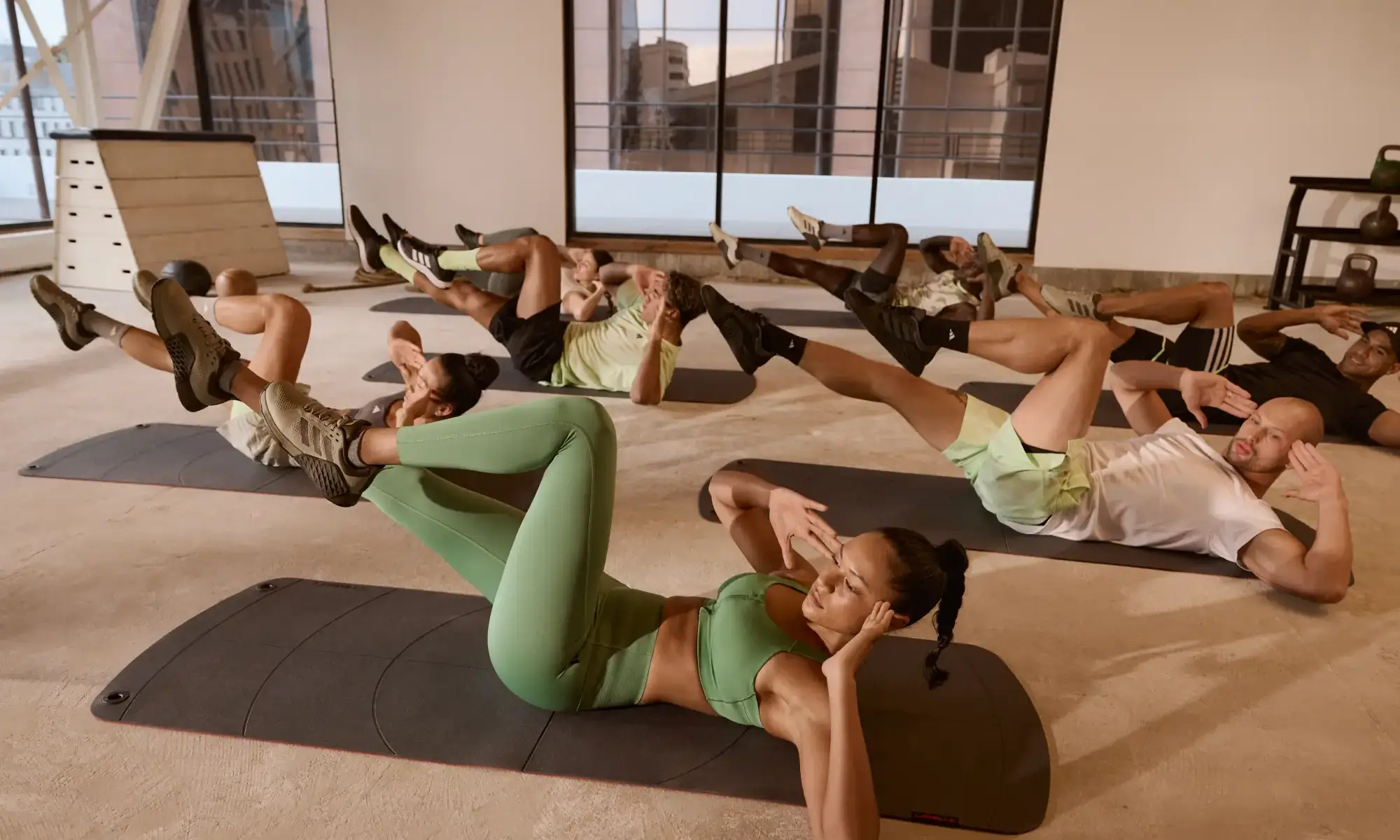
Groupness is a scientific term that relates to the level to which someone feels that the group impacts their workout; if members perceive that they rely on others in the class, groupness levels are high. In contrast, a lack of group interaction reflects low levels of groupness. To summarise, groupness represents a feeling that you are exercising with others, and not just beside other people in a class.
Key factors identified by previous research that make individuals feel like a real group include having a shared sense of purpose, simple structure, basic rules, and a cooperative focus. These factors enhance the attraction to being part of the group.
By way of background, the research team’s quest to find out more about groupness was intensified when observing seas of people doing classes such as BODYATTACK™, BODYCOMBAT™ and BODYJAM™ at a recent Les Mills Live event. To Les Mills Head of Research, Bryce Hastings, the hundreds of fervent exercisers looked like a vast wave as they moved together in a highly synchronized style. This set him thinking about groupness; what happens when hundreds of people move along at exactly the same pace and how does this differ across other group fitness formats which do not involve synchronized movement?
About the study
Over a two-week period, 97 adult exercisers (85.5% females) completed surveys after each fitness class they did. Data was collected by members of the research team who were stationed at the fitness facility. Following each class, participants completed a brief questionnaire pertaining to levels of groupness, characteristics of the class and feelings about the session they had just completed. In particular, participants were asked to comment on exertion, enjoyment, satisfaction and their intention to return to the class.
Class offerings included cardiovascular activities such as cycling (RPM™), athletic conditioning (BODYATTACK, BODYSTEP™), martial arts-inspired workout (BODYCOMBAT), synchronized strength training using weights (BODYPUMP™), and high intensity interval sessions (LES MILLS GRIT™ and LES MILLS SPRINT™).
The findings
The findings showed conclusively that perceptions of groupness have a significant bearing on exertion, enjoyment, satisfaction, intention to return. They also showed that perceptions of groupness fluctuate between classes.
Importantly, when groupness was rated as being higher, greater exertion and intention to return was reported and exercisers held higher perceptions of enjoyment and satisfaction.
While the unified flow of movement in classes like BODYATTACK and BODYCOMBAT saw people perceive groupness levels as being high, the non-synchronized classes such as LES MILLS GRIT and LES MILLS SPRINT saw groupness levels rated at a lower level.
Ultimately, as it pertains to fitness classes, the research showed that the more groupness the better.
Conclusions
In conclusion, when we put groupness under the microscope, the findings were in line with what we had suspected when we embarked on this study; maximizing the group effect is invaluable in terms of delivering the ultimate group fitness experience.
We also now know that instructors who teach non-synchronized group fitness classes face a bigger challenge in creating a strong group effect or high levels of groupness than those who instruct ‘on the beat’ workouts like BODYCOMBAT and BODYATTACK - which enhance the group effect as a result of their synchronized movement patterns.
“We’ve taken these latest findings and integrated additional techniques to our coaching model to ensure groupness is maximized across all of our group fitness offerings,” says Hastings.
The findings also illustrate the crucial role Instructors play in maximizing the group effect and consistently bringing a class together successfully.
“Our instructors have the knowledge, skills and experience to be able to help people feel like they’re working out as a true group with shared goals,” he says.
“It’s their ability to connect with the individuals in the group and create a sense of ‘we’ in a class that produces a very positive overall experience. They can take what we know from the science and bring it to life for club members.
“By measuring groupness we now have the breadth and depth of information and data to further enhance the group effect,” says Hastings.
More about the author
Bryce Hastings
Bryce Hastings drives the science behind the sweat, leading world class research that shapes how millions of people train. Working alongside internationally renowned research partners, Bryce bridges the gap between the lab and the gym floor, ensuring every LES MILLS™ program is safe, effective, and powered by science.
He has developed numerous research programs and co authored reports across a range of fitness and scientific publications. These include the landmark Get Fit Together trial, alongside research into core conditioning, high intensity interval training, and exercise strategies for sedentary individuals.
A certified Physical Therapist since 1986, Bryce’s academic work is supported by extensive hands on experience. He owned a private practice within the original Les Mills World of Fitness in Auckland and holds an Advanced Diploma in Manipulative Therapy and a Master of Philosophy from Auckland University of Technology, where he serves as a Research Associate and lectured part time for eight years.




_(10)_HR%20Darbyshire%202000x1039%20no%20exp%20v2.webp)
.webp)

Research