LES MILLS TONE and postpartum anxiety
With rates of postpartum anxiety on the rise, this important study shows how eight weeks of bi-weekly LES MILLS TONE™ workouts can significantly ease any anxiety and stress new mothers experience.
Introduction
Women who have just had a child are much more likely to suffer anxiety and other mental health issues than others, and in recent years their suffering has been amplified. According to a 2020 study1, 40 percent of postpartum
women now report depression (compared to 15 percent pre-pandemic) and 72 percent report moderate-to-high anxiety (compared to 29 percent pre-pandemic).
Research shows postpartum women who gradually return to exercise four to
six weeks after delivery report lower depression and anxiety than those who do not meet the guidelines for physical activity2.
Hypothesis
Women between six and nine months postpartum will show reduced levels of stress and anxiety following eight weeks of LES MILLS TONE™.
Method
Twenty-one women volunteered to participate in a bi-weekly group exercise program for 8 weeks.
All women were at least 6-weeks postpartum and had been given physician clearance to begin exercising again. Classes were offered twice per week at an outdoor location due to restrictions on indoor exercise during the study period which coincided with the COVID-19 pandemic.
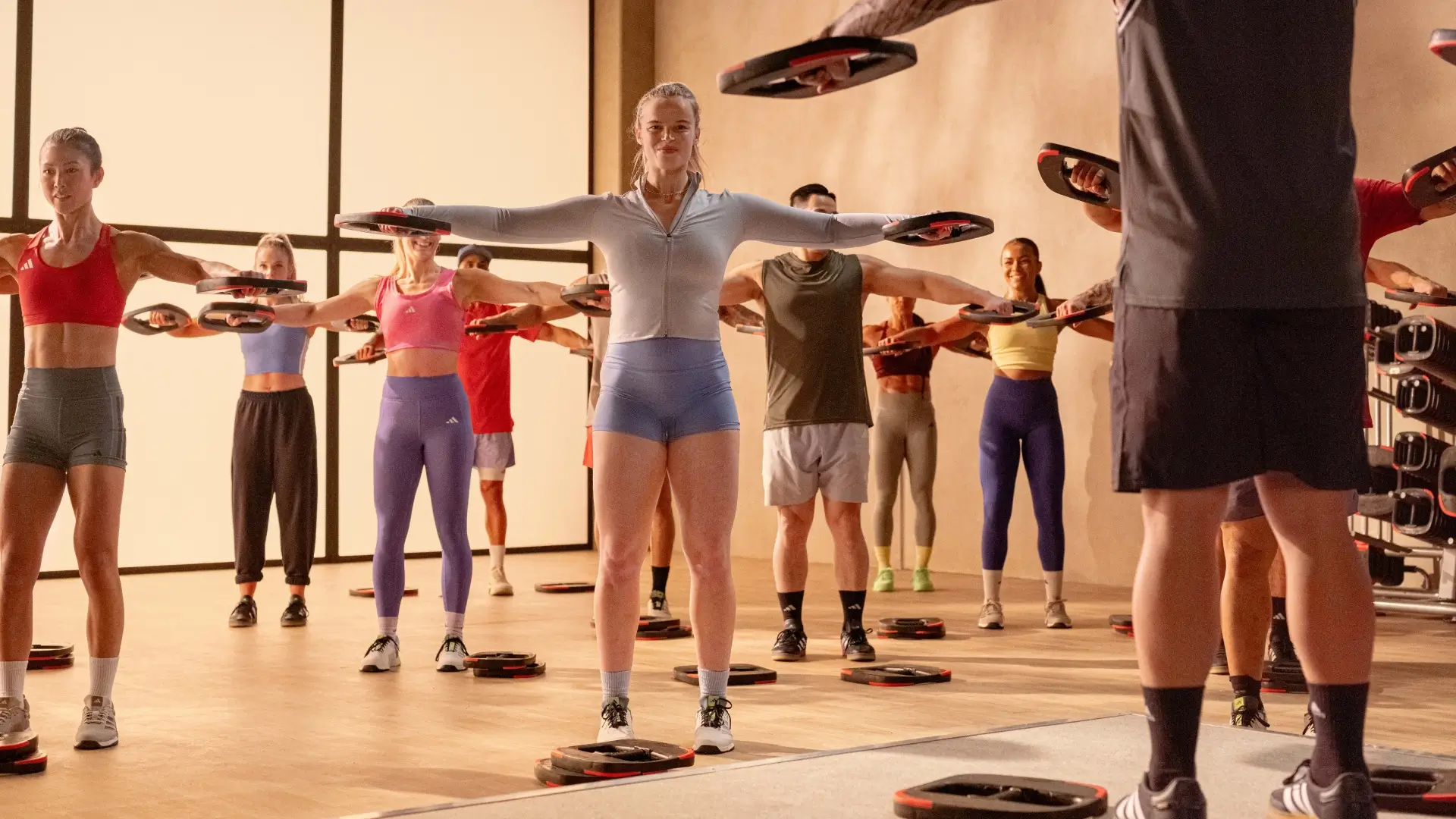
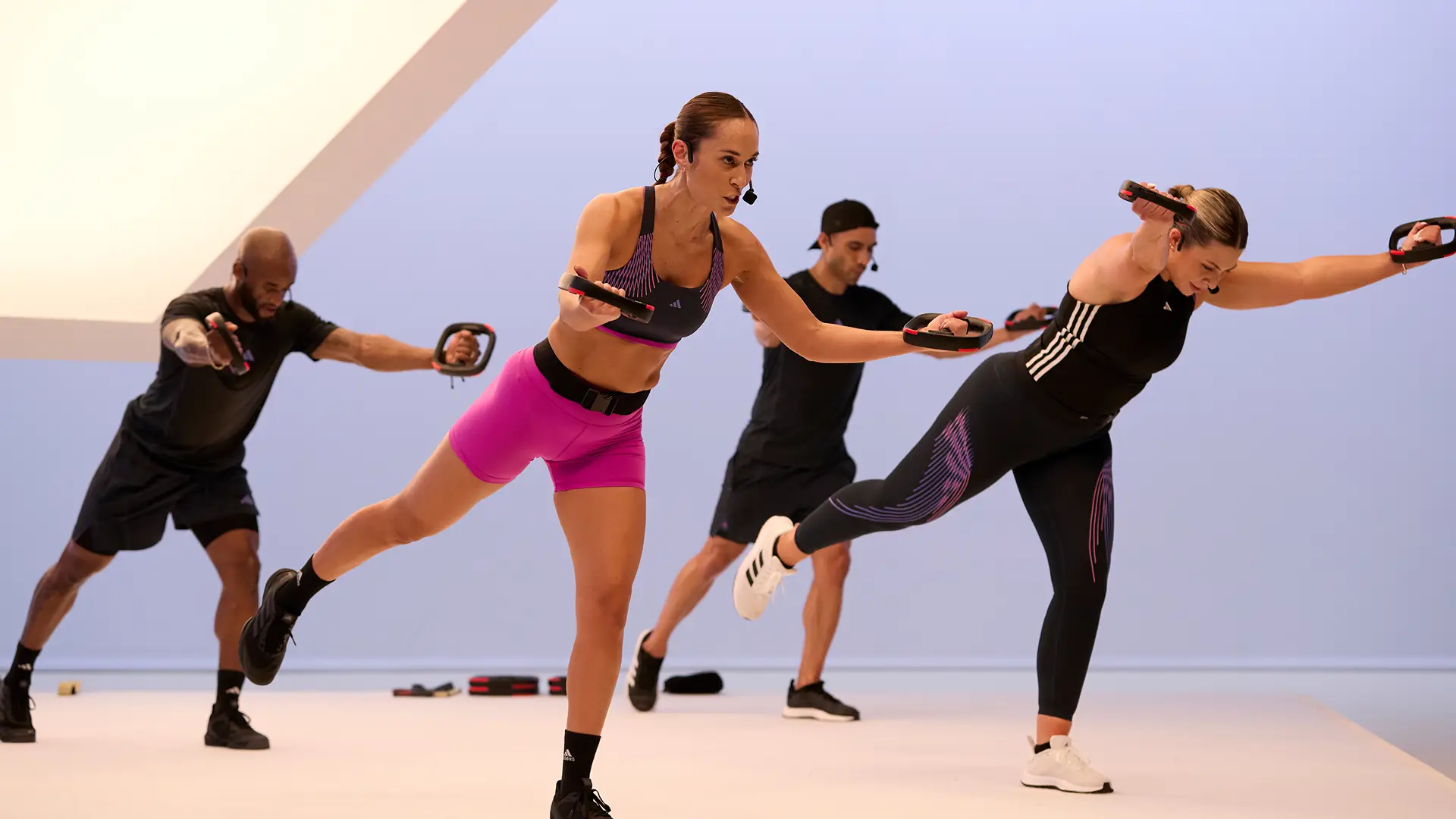
The group exercise intervention was the 45-minute group fitness class LES MILLS TONE.
Participants were given the option to bring their baby to the group fitness class to help reduce potential barriers with exercise engagement. In each class, the instructor provided options to either increase or decrease the intensity of each exercise. In addition, options for using the baby as weight if the mother had to be attending to the baby during exercise were provided.
Before and after the 8-week exercise intervention, participants completed
online questionnaires. For mental health outcomes, in addition to state anxiety, postpartum depression, trait anxiety, and perceived stress were measured. Depression was assessed using the Edinburgh Postnatal Depression Scale.
Results
The women reported a significant reduction in state anxiety (i.e. anxiety in the current moment). This decreased from an average of 3.6/10 (where 0 was no anxiety) before each exercise session, to 1.6/10 immediately after each session – a decrease of 55%.
At the end of the eight-weeks, the women reported significantly lower levels of state anxiety than at the start of the program, falling from 3.3/10 to 1.9/10 – a 42% decrease.
There were also improvements in depression and perceived stress, with small to moderate effect sizes, but these changes were not statistically significant.
As well as feeling more motivated to exercise, the mothers found the classes contributed to their basic psychological needs by increasing feelings of autonomy, competence and perceptions of bonding and relatedness.
Conclusions
Our 8-week bi-weekly exercise program for new mothers significantly improved state anxiety pre-post each exercise class, and from pre to post 8-week intervention. There were also improvements in depressive symptoms, perceived stress and trait anxiety (i.e. general anxiety). In addition, we found a significant improvement in meeting basic psychological needs, including autonomy and competence, and an improvement in autonomous regulation (i.e. an increase in internal motivation to engage in exercise.
References
1. Davenport, MH., Meyer, S., Meah, VL., Strynadka, MC., Khutana, R. (2020). Moms are not OK: Covid-19 and maternal mental health. Frontiers in Global Women’s Health. 19.
2. Kołomańska-Bogucka, D., & Mazur-Bialy, AI. (2019). Physical activity and the occurrence of postnatal depression-A systematic review. Medicina (Kaunas, Lithuania). 55(9):560.
Read the full article
More about the author
Bryce Hastings
Bryce Hastings drives the science behind the sweat, leading world class research that shapes how millions of people train. Working alongside internationally renowned research partners, Bryce bridges the gap between the lab and the gym floor, ensuring every LES MILLS™ program is safe, effective, and powered by science.
He has developed numerous research programs and co authored reports across a range of fitness and scientific publications. These include the landmark Get Fit Together trial, alongside research into core conditioning, high intensity interval training, and exercise strategies for sedentary individuals.
A certified Physical Therapist since 1986, Bryce’s academic work is supported by extensive hands on experience. He owned a private practice within the original Les Mills World of Fitness in Auckland and holds an Advanced Diploma in Manipulative Therapy and a Master of Philosophy from Auckland University of Technology, where he serves as a Research Associate and lectured part time for eight years.





_(10)_HR%20Darbyshire%202000x1039%20no%20exp%20v2.webp)
.webp)

Research