Wellness wins: Why 94% of members can’t live without their gym
The 2026 Global Fitness Report uncovers striking new details around what wellness really means to members. We break down the stats and reveal a powerful opportunity for operators to drive loyalty, deepen engagement, and differentiate their offering.
From matcha-fueled lattes, to Smartwatches and lavender-infused pillow mists: The wellness halo is fueling growth across countless categories. But beyond the products lies something more meaningful: the wellness motivations that are driving consumers today – and reshaping the fitness landscape. These motivations offer important clues about why wellness has become so influential – and why it’s been so hard to define. Historically, harnessing the wellness effect has proven tricky, largely due to individuals having their own unique perspectives on what it means. Recent trends, however, show a replicable formula is emerging – one that operators are well positioned to capitalize on.
1. The toolkit for modern living
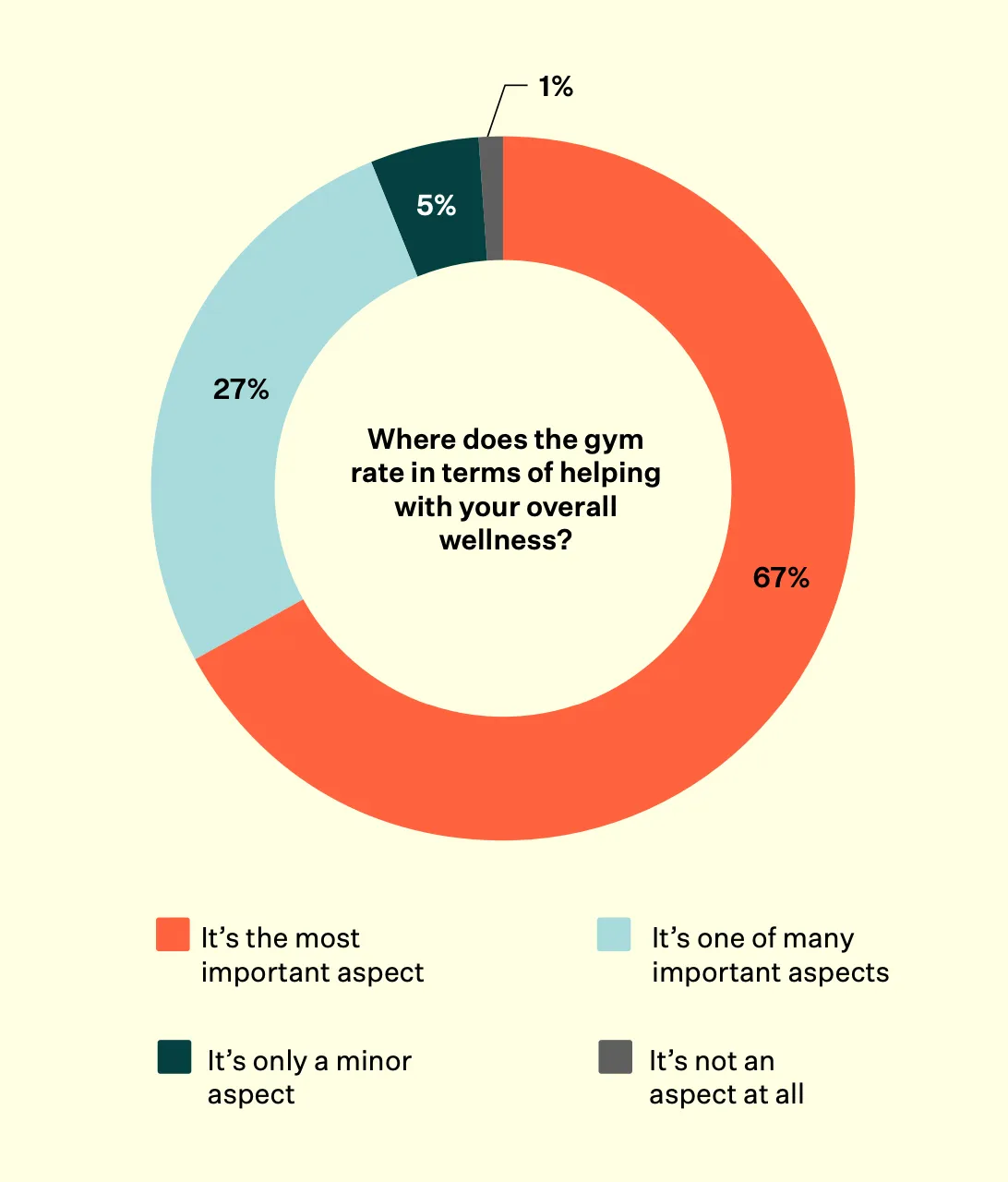
For the majority of consumers, fitness is now seen as an essential pillar of a healthy lifestyle, as crucial as sleep or nutrition. In fact, the 2026 Global Fitness Report shows 94% of people view the gym as among the most important tools in their wellness toolkit.
As people build more intentional wellness habits, highly engaged members are seeking clubs that integrate seamlessly with modern life – spaces that blend coaching, community, and mindful movement into one connected experience. This shift creates a powerful opportunity for operators to boost growth and retention by demonstrating how their offering ticks the must-haves in a member’s wellness toolkit. Whether through marketing that highlights your club’s role in driving daily wellbeing, or in club experiences that make strength, recovery, and social connection feel intuitive, essential and easy, the most successful operators will be the ones who help members see – and feel – the gym as a key instrument they rely on to stay well.
2. Community: The glue that binds
Gen Z’s arrival into the market has brought with it a clear demand for fitness experiences that hit two main priorities – people and purposeful movement – both of which shape not only how they like to work out, but what they need to support their broader sense of wellness. According to the 2025 Wellness Watch from ABC Fitness, nearly half (47%) of all new gym joins in 2025 came from Gen Z, and they’re showing up to forge connections. The same report found 47% of Gen Z say community is the reason they stick with fitness.
And for the prospects who have yet to join a facility? The flip-side of the coin is what’s holding them back. The 2026 Global Fitness Report found nearly a quarter of all non-gym members are put off by the fact they don’t know anyone else at their gym, or don’t have anyone to work out with. Intentional marketing that spells out exactly how your facility can support with community and connection is the first step to winning with both audiences. And your staff sit at the heart of this community expectation, bringing the expertise and familiarity that help members feel seen in their wellness needs and building the trust that keeps them coming back.
3. The happiness effect
In a world where digital living is driving an always-on culture, it can be hard to switch off, making the wellness trend’s influence on happiness something to be treasured – and a huge opportunity for clubs to seize. 49% of all regular exercisers work out to feel good and a further 39% do so to improve their mood, highlighting the integral role gyms now play in meeting members’ holistic health needs – driving physical and emotional outcomes.
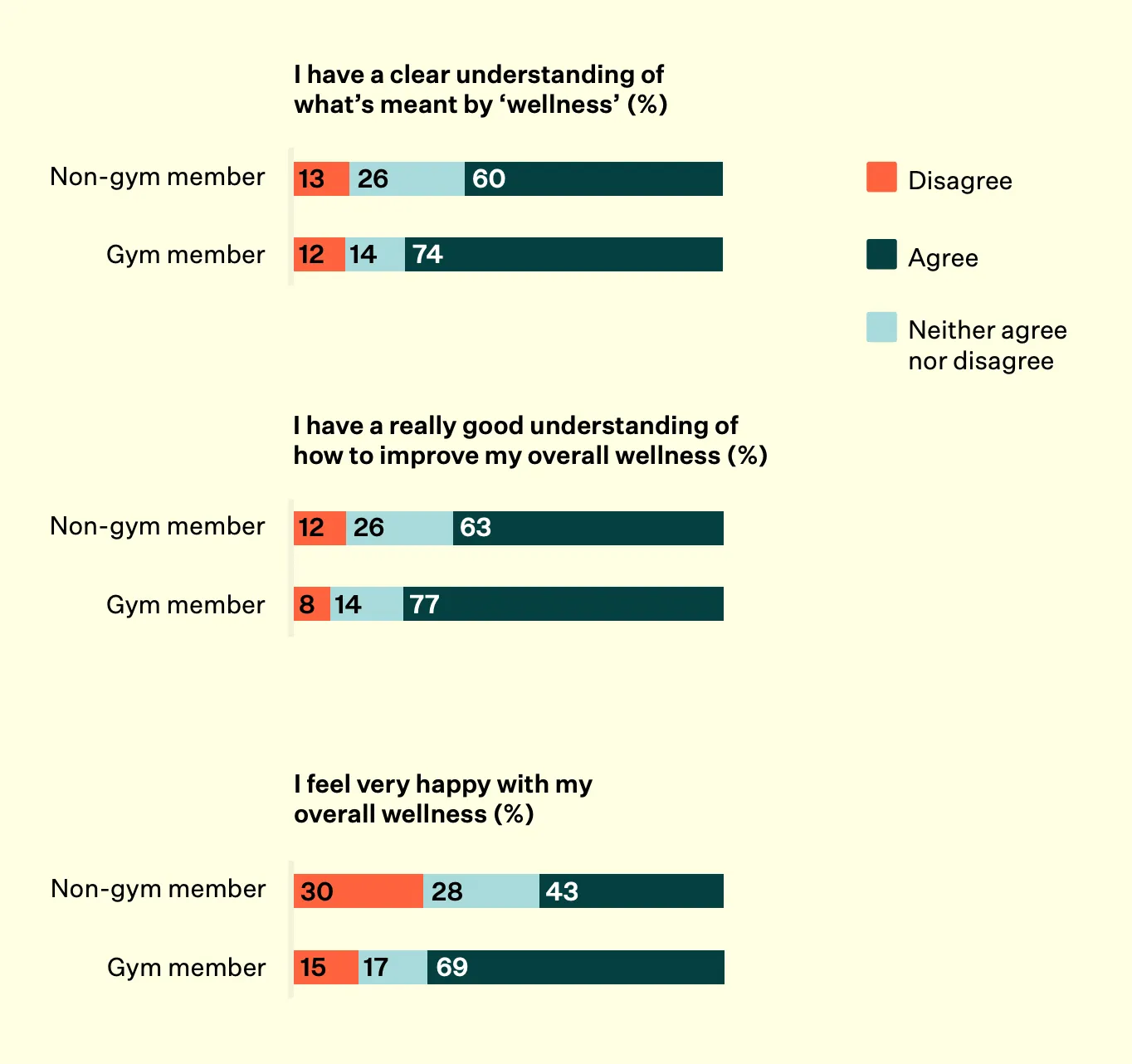
And gym members aren’t just feeling good: clubs are helping provide clarity for fitness consumers: 74% of gym members say they have a clear understanding of what is meant by "wellness", but this drops to 60% among non-members, highlighting the role of gyms in empowering users to understand and define their needs. For those with a clear sight of what wellness means to them, it’s producing tangible outcomes: gym members are 46% more likely to feel very happy with their personal wellness than non-members.
4. The wellness ecosystem
It’s clear that wellness is a key priority – but how are people meeting their needs? Over half of fitness fans (51%) cite socializing with their friends or family as a foundational wellness practice they’re engaging with three or more times a week. At least once a week, 79% of people are exercising, 33% practise breathwork, and 66% spend time in nature, amongst other activities.
So where do the opportunities lie for operators? In creating more reasons for members to return, more often.
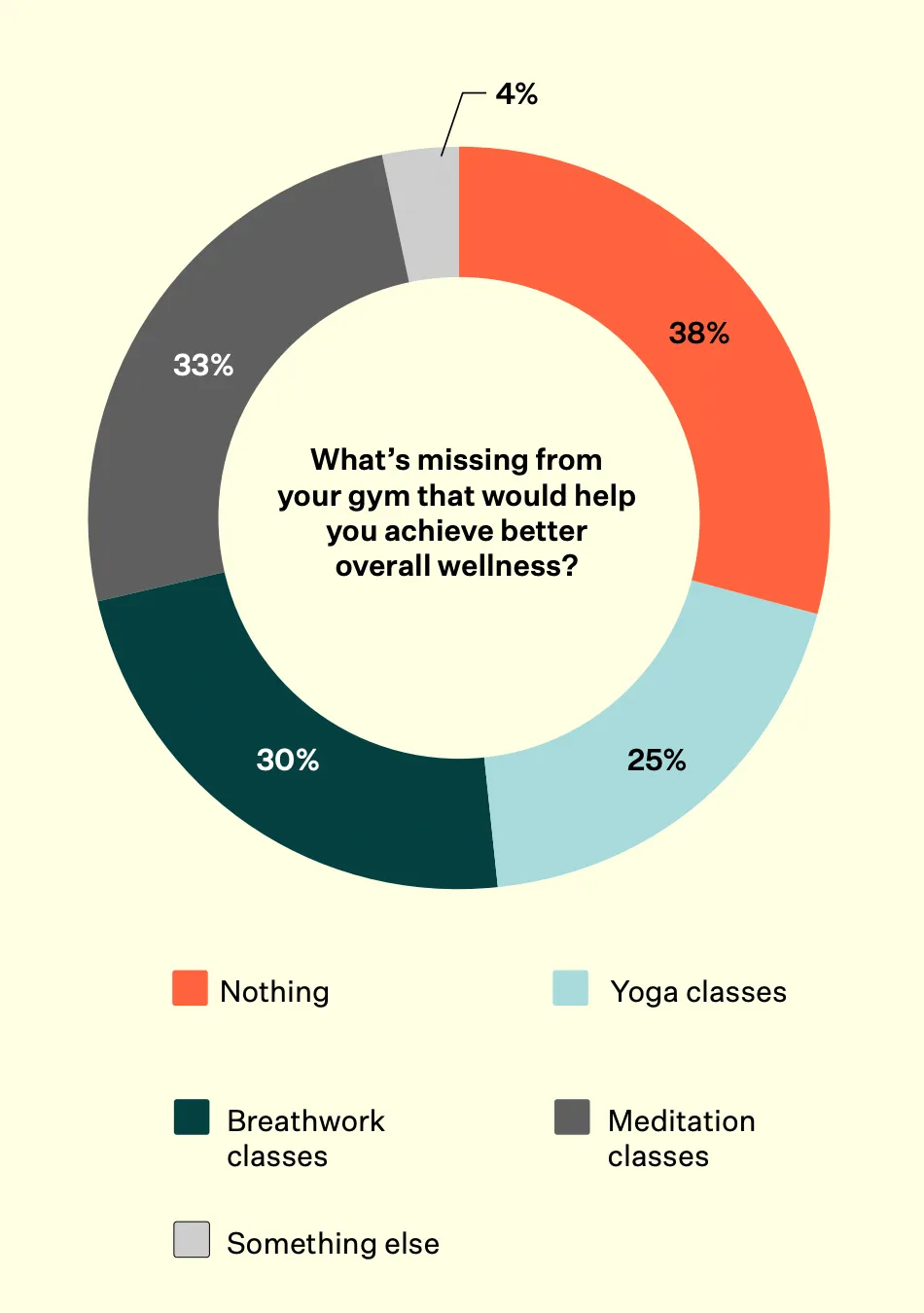
The appetite for additional wellness activities is high, with breathwork, meditation and yoga all in demand. Exercising for mental health is a key driver, but members are looking for options to offset the more physically demanding elements of their workouts: supporting recovery, rejuvenation and offering ways to decompress. This chimes with findings from ClassPass that show low-impact training was one of the fastest growing ways to work out in 2025 – up 112% year on year. ClassPass bookings also show that Yoga was the second most popular workout of last year – up 28% year on year – highlighting strong demand for mindful movement.
5. How clubs are winning with yoga
The appetite for additional wellness activities is high, with breathwork, meditation and yoga all in demand. Exercising for mental health is a key driver, but members are looking for options to offset the more physically demanding elements of their workouts: supporting recovery, rejuvenation and offering ways to decompress. This chimes with findings from ClassPass that show low-impact training was one of the fastest growing ways to work out in 2025 – up 112% year on year. ClassPass bookings also show that Yoga was the second most popular workout of last year – up 28% year on year – highlighting strong demand for mindful movement.
Interested to learn more? Hear from real operators already winning with Les Mills Yoga:
READY TO UNLEASH YOUR NEXT GENERATION OF MEMBERS?
LES MILLS YOGA™ forms part of a new series of programs crafted to meet the specific demands of Gen Z and put your club in the fast lane for growth.
READY TO UNLEASH YOUR NEXT GENERATION OF MEMBERS?
Clubs and Facilities
The simple gym design principle that powers profitability

Clubs and Facilities
What are the Best Group Training Classes to Attract New Gym Members?

Clubs and Facilities
5 best practices for building lasting member loyalty

Clubs and Facilities
Video: How Nuffield Health increased group fitness attendance by 20% with LES MILLS REFORMER

Clubs and Facilities
Why group fitness is a retention driver for gyms and health clubs

Clubs and Facilities
The music-led Reformer experience turning boutique fans into big box converts
Clubs and Facilities
Community holds the key to continued club growth

Clubs and Facilities
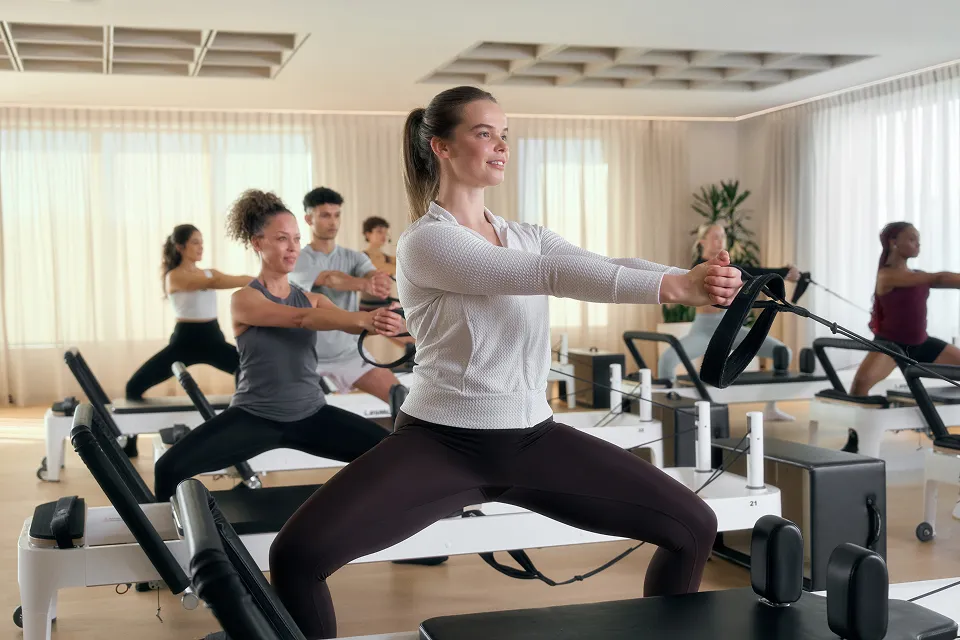
What is LES MILLS REFORMER™? All you need to know about the workout redefining Pilates
Clubs and Facilities
LES MILLS REFORMER™: A powerful new way for clubs to capture the growing Pilates market
Clubs and Facilities