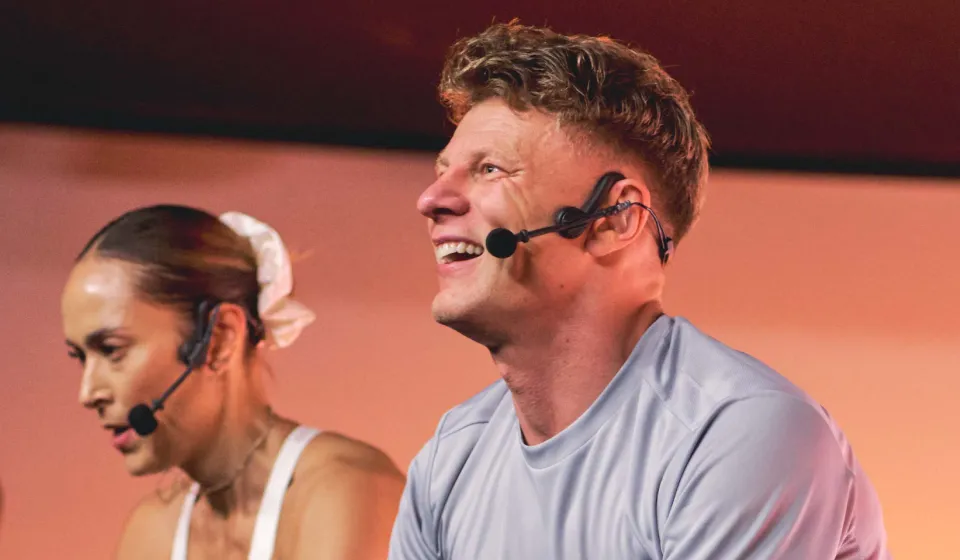
Become Your Best Self Part 2: Awareness Into Action

Drawing on insights from Kylie Gates' wellness coaching course, we shift the focus to the habits, choices, and routines that shape how you teach, recover, and manage energy day to day.
Special thanks to Justin Riley, LMI Education Content Specialist, for his support with this feature.
In Part One, we explored the “roots” that shape how we think, feel, and perform – our mental, emotional, physical, and spiritual systems, along with our values and sense of purpose.
But understanding wellness is only the starting point. Real change comes from the choices you make day-to-day, before class, after class, and in the rhythm of life beyond teaching.
This is where habits and self-care move beyond ideas – becoming practical tools for lasting wellbeing.
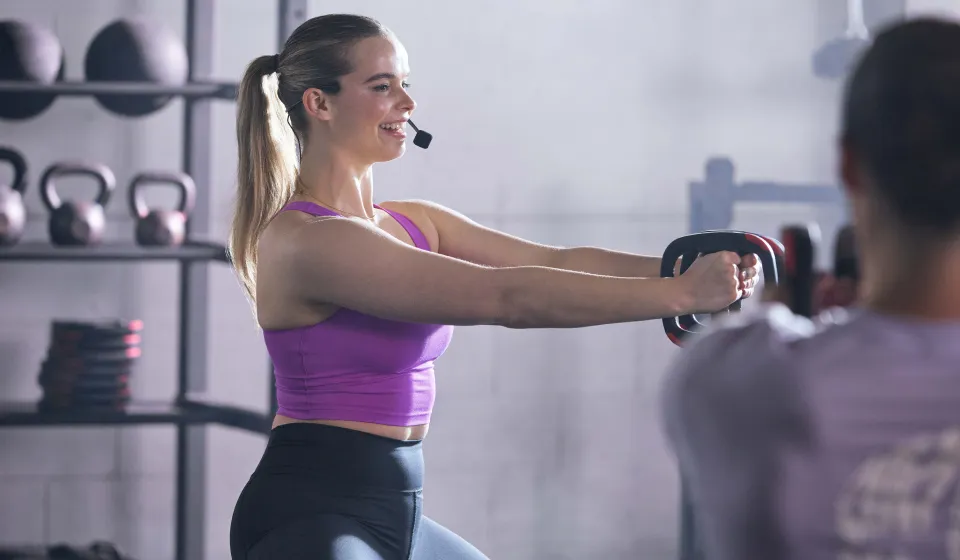
Habits: Where Your Teaching Energy Becomes Sustainable
Habits are repeated behaviors that eventually become automatic. They shape how you operate during busy weeks when motivation is low, but expectations are still high.
For Instructors, habits quietly determine:
- How prepared you feel before class
- How you recover after teaching
- How consistent your energy is across the week
- How well you look after yourself outside the studio
The key insight is this: you don’t rise to motivation – you fall into systems.
So the question becomes not “Am I motivated?” but:
What systems am I relying on when I’m tired, busy, or stretched?
Simple habit principles that actually work:
- Make it visible – keep reminders and routines where you can see them
- Make it easier to succeed – prepare meals, clothes, playlists, or recovery tools ahead of time
- Focus on consistency – aim for progress, not perfection
- Plan ahead for difficult weeks – decide in advance how you’ll protect your energy when life gets busy
- Build accountability – use check-ins, routines, or support from others to help you stay consistent
Small habits repeated consistently are what allow Instructors to sustain high energy over time – not bursts of effort.
.webp)
Beliefs: The Invisible Drivers Behind Your Performance
Underneath habits sit beliefs – the internal narrative shaping how you see yourself as an Instructor and as a person.
These beliefs often show up quietly:
- “I should be more consistent”
- “I can’t teach well when I’m tired”
- “Other Instructors are better than me”
- “I always must be ‘on’”
Left unchallenged, beliefs shape behavior. And behavior shapes experience.
The important shift is this: beliefs are not fixed.
Thanks to neuroplasticity, the brain adapts through repetition. What you repeatedly think and do literally reshapes your neural pathways over time.
This means change is not about forcing positivity – it’s about retraining patterns through awareness and repetition.
A simple process:
- Notice the limiting belief
- Question its accuracy
- Replace it with a more useful perspective
- Reinforce it through action, not just thought
For Instructors, this is powerful – because how you think about yourself directly influences how you show up in front of others.
.webp)
The Foundations Still Matter: Sleep, Nutrition, and Movement
Before advanced self-care strategies, the basics matter most.
These three foundations directly impact your ability to perform and recover:
- Sleep restores energy, focus, and emotional regulation
- Nutrition supports cognition, mood, and physical output
- Movement regulates stress and builds resilience
When these are strong, everything else becomes easier.
.webp)
Self-Care: Building Recovery Into Real Life
Self-care is not a luxury – it’s how you maintain your ability to show up sustainably.
It can be simple, practical, and realistic:
- A few minutes of breathing or mindfulness between classes
- A walk outside after teaching to reset mentally
- Journaling to process emotional load
- Stretching or yoga to release physical tension
- Time in nature to disconnect and recharge
- Connection with people who refill your energy
And importantly, noticing the small moments – what we might call “glimmers” – those brief experiences that bring calm, joy, or presence into your day.
For Instructors, self-care is what allows you to keep giving without burning out.
.jpg)
Celebration: Reinforcing Progress
One of the most overlooked parts of growth is celebration.
In a profession built on delivery, feedback, and constant improvement, it’s easy to move straight to the next class, the next plan, the next goal.
But celebration matters because it:
- Reinforces positive behavior
- Builds confidence
- Shifts focus from what’s missing to what’s working
- Strengthens motivation through evidence of progress
Even small wins matter – showing up on a tough day, connecting deeply in a class, or staying consistent in your own training.
What gets recognized gets repeated.
.webp)
Happiness and Mindset: The Outcome of Alignment
Wellbeing is also shaped by how we experience life from moment to moment.
Research consistently shows that happiness is supported by:
- Gratitude and mindfulness
- Strong relationships
- Purpose and meaning
- Using personal strengths
- Engaging in flow experiences
For Instructors, flow is often found in the studio – when music, movement, and connection align, and everything feels natural and alive.
These moments are not accidental. They are the result of preparation, presence, and alignment.
.webp)
Bringing It All Together
Instructor Wellness is not built through one change. It is built through alignment across multiple layers:
- Beliefs that support you
- Habits that sustain you
- Self-care that restores you
- And awareness that keeps you honest
When these elements work together, teaching stops feeling like something you push through – and becomes something you can sustain with energy, clarity, and purpose.
Wellness is not about doing more. It’s about doing what matters consistently.
.webp)
Ready to learn more?
Explore nine bite-sized wellness coaching videos now available on your Releases App.
In the Become Your Best Self course, Creative Director and Integrated Wellness Coach Kylie Gates guides you through life-changing topics, including finding your "why", building strong foundations, and creating greater happiness and inner peace.
Head to Learn – Tips, then scroll down to the Wellness Library.
Every Instructor has moments where things feel heavy. If this helped you reflect, pass it on to someone else who might benefit from the same reminder. Or you can share on social media by clicking the link at the top of this page.
Become your best self part 1
More about the author
Jonathan Tustain
Jonathan is a Digital Content Producer at Les Mills International, where he develops and delivers content for Instructors across the Les Mills website and app. His role focuses on creating useful, engaging content that supports Instructors and strengthens their connection to the Les Mills community.
With a background spanning media, fitness and digital content, Jonathan has written for publications including Gym Owner Monthly and How It Works, and has developed and delivered industry events including The Future of Fitness. He has also spoken at major international events and organisations including MIPCOM, MIPTV, GSMA, Hubei TV and NYU Abu Dhabi.
Jonathan brings together editorial, creative and strategic experience to explore new ways of communicating with fitness professionals and creating content that is relevant, engaging and useful to Instructors around the world.


Instructor News
Kylie Gates on building a fitness career that lasts


Instructor News
The Real Lives of Les Mills Instructors Part 3

Instructor News
The Real Lives of Les Mills Instructors Part 2
Instructor News
Teaching LES MILLS REFORMER™: Instructor Insights

Instructor News
Les Mills Q3 ’26 Release Highlights: What’s New

Instructor News