How to train smarter: A leading performance coach explains

Nic Gill is widely regarded as a leading performance coach. He spent 18 years with the famous New Zealand All Blacks rugby team and is now part of the Baltimore Ravens, leading the strength and conditioning, medical, nutrition, and sports science teams.
A few years back, we caught up with Gill to find out about the high-performance training principles that everyday exercisers can use to reach their true potential. He explained the value of gauging training load and the smartest way to get long-term results … His advice still rings true.
What is training load and how do you measure it?
NIC GILL (NG): “Training load is one of those things where it’s more of an art than a science. It’s the cumulative amount of exercise you’re doing, usually measured over a week, and it can be measured by two things – duration and intensity. Duration is easy to measure. But intensity could be anything from how fast you’re running, your heart rate, how heavy the weight is on your bar, or the complexity of the group fitness session you’re taking.”
But it’s not really specific numbers that you need to watch – the most important measurement is change in training load ?
NG: “If there’s a huge increase or a huge decrease in training load, it needs to be considered and managed. So, for example, if you’re a weekend warrior and one weekend you do ten hours of exercise and then the next you do two, your average training load is somewhere around the six hours a week mark – and you should be trying to have less dramatic changes. A really common mistake is going from zero to hero. And then you get hurt, you can’t exercise like you want to, and it’s a vicious cycle. So progression of load over a period of time is the best way to stay injury free.”
Is injury the major risk? Or can too much load hinder performance in other ways too?
NG: “The main risk of not managing your training load is that you get hurt. Or you get tired and over-trained, and then you still get hurt. Train too much and your mood starts going through the floor, you become a horrible person to be around. Worst of all, you don’t know it until you’re in it, until it’s too late!
As I’ve gotten older, I’ve learned that if I want my body to feel good, I need to run every other day. Sure, I can handle running every day, but I feel far better if I run every other day. And it’s the same for people lifting weights, or doing high-intensity classes. Something that most people should be thinking about is not having lots of big hard days in a row.”
Improving performance comes when you increase your training load – but not too drastically. I’ve heard that a 10 percent increase a week can be a good increase to aim for?
NG: “Yeah, I’ve heard that too. But I think it probably depends on your background and your history. I know for myself, I can do nothing for a month, but that doesn’t mean I can only do 10 minutes in my first training session back. Because, as an endurance athlete, my training background is so different. I think once you’ve established a base level of exercise, then 10 percent a week, give or take, is probably a pretty sensible progression. However, I think the thing to be conscious of is that it’s not just time that you’re trying to progress slowly, but intensity. A 10 percent increase in intensity is a significant change in comparison to a 10 percent increase in duration.”
How do elite athletes manage their training load? Is there are formula?
NG: “It’s difficult to define. If we’re talking about endurance athletes, yes there’s definitely the need for progressive increases and decreases in load to allow the body to absorb the stimulus and recover while still ticking things over with regular exercise. For team sport athletes, it’s a little bit different because they need to be at peak performance every weekend, which means you can’t be adding 10 percent on every week, you need to be ready to perform at peak every Saturday.”
External and internal exertion are both valid measures of training load, is there one measurement that’s more significant?
NG: “It becomes quite complicated. But basically, external exertion is just what the numbers say, it could be that you have 100KG on the bar, or you might be running at 14KM an hour. Internal exertion can be measured by something called perceived exertion, you know, how the session feels. Typically, the rule of thumb is;
- An easy session is one where you’re not really puffing, you’re breathing a bit harder and you’re sweating a little bit, but you’re reasonably comfortable.
- A moderate session is when you’re starting to puff, you’re sweating a lot, and it’s starting to get a bit difficult to hold a conversation.
- A hard session is when you’re sweating a bucket-load and it’s really uncomfortable to talk.
It’s important to recognize that perception of exertion changes if you’re tired. So an easy session one day, could actually be moderate the next, simply because of the fatigue you’re under. It’s the internal scale of the body actually telling you how it’s feeling and you need to listen to it.”
What about using devices to monitor your training load. Are they necessary?
NG: “Technology is cool, and numbers are interesting. For some people, some personalities, numbers become very addictive and all-consuming – and I’m a bit like that. As an endurance athlete, I love knowing how much fatigue I’ve got at the moment, how much load I’m under, and knowing that tomorrow I should be able to run this fast in this many minutes. But for some people, it can actually be quite detrimental because if you’re not hitting certain numbers, you can become down about it, and then you push a bit harder to hit some numbers and you hurt yourself. So I think numbers need to be used with a degree of common sense and logic. Counting calories and measuring steps is educational, but it’s not the be-all and end-all.”
“Perception of exertion changes if you’re tired … An easy session one day could actually be moderate the next. It’s the internal scale of the body actually telling you how you’re feeling, and you need to listen to it.”
But obviously some people, such as elite athletes, need technology. When do you need to start taking it more seriously?
NG: “Absolutely, but the level of importance needs to be measured. If you’re trying to win a world championship, then some of that data becomes absolutely vital in your planning and recovery. But if you’re just trying to stay healthy in your life and be able to earn a cold beer at the weekend, you can use the basic numbers to educate yourself and keep yourself on track without going overboard.”
“Fun is important ... just like anything in life, as soon as you stop enjoying it, it all goes downhill.”
So if we’re not relying on complex tracking, where’s the best place for us everyday exercisers to get motivation?
NG: “The most important thing is fun and enjoyment. If you want to enjoy a healthy life, you need to find a type of physical activity that you enjoy doing. Figure out a way to get your heart rate up that you love doing. And if you haven’t yet found that, keep trying new things, and searching for a physical activity that makes you happy.
Fun is important for professional sports people too. It’s critical that elite athletes enjoy what they do. Just like anything in life, as soon as you stop enjoying it, it all goes downhill.”
Any other advice?
NG: “I’m in the business of trying to help athletes prolong their careers – and to prolong their careers we need to invest time into their bodies. It’s not always about working hard, but actually working smart. It’s easy to work hard for a couple of years, but to do that for fifteen years is a bit different.
For everyday exercisers, it’s the same. If you just flog your body day-in and day-out, at some point it will just say enough is enough. I encourage people to invest a bit more time and energy into things like flexibility, or stretching and mobility, massage or trigger-point massage or rolling. You don’t want to wear out your body. Being smart is the key”.
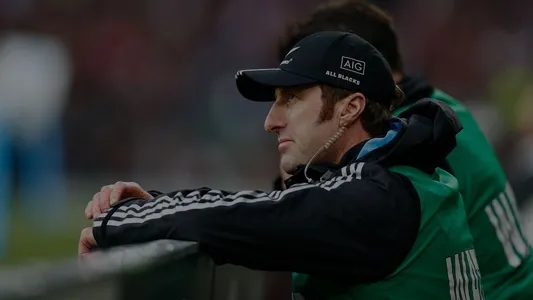
NIC GILL’S 6 TOP TIPS FOR TOP PERFORMANCE
- Keep tabs on your training load by recording the amount you exercise and the intensity of your exercise (you can gauge this using perceived exertion).
- Consistency is key – avoid huge increases or decreases. Small increments of around 10 percent a week will help you improve.
- Don’t flog your body day after day, avoid big training days back-to-back.
- Listen to your body, if you’re tired your perception of exertion changes, so you need to take this into account.
- Invest in your body, making time to stretch, build flexibility and recover
- Most importantly, find something you enjoy. You need to love it if you want to succeed.
If you want to learn more from Nic Gill, check out his book titled Health Your Self. You can also follow Nic Gill on Instagram and learn more about his work at www.nicgill.com.
Want more health and fitness insights?
Get monthly Fit Planet updates straight to your inbox.
Want more health and fitness insights?
More about the author
Emma Hogan
Emma is a health and fitness writer with 20 years of experience creating evidence-based features that bridge the gap between scientific research and real-world application. Based in New Zealand, she works with global exercise scientists, physiotherapists, and internationally recognized fitness experts to uncover the latest insights in health, fitness, and human performance.
Known for making complex topics accessible and engaging, Emma writes on everything from strength training and recovery to motivation, behavior change, and lifelong wellbeing. Her work helps readers navigate an increasingly crowded health landscape and make informed choices grounded in credible research rather than trends or misinformation.

Fit Planet
Home exercise hacks: The tips home exercisers swear by
Fit Planet
Why exercise fights depression: scientists uncover how muscles talk to the brain

Fit Planet
Exercise for mental health: What the research says about feeling happier, healthier, and more resilient
Fit Planet
How to become a group fitness Instructor: A step-by-step guide
Fit Planet
Why music makes exercise feel easier, more enjoyable, and more effective

Fit Planet
Are you eating enough to support your workouts? 7 signs you're under-fueling your training
Fit Planet
10 signs you'd make a great group fitness Instructor
Fit Planet
Does exercise help you lose weight? What the science really says
Fit Planet
How much strength training do you need to live longer? Scientists say 90-120 minutes per week
Fit Planet
Should you change your workouts based on your menstrual cycle?
Fit Planet
When is the best time to exercise? Morning vs evening workouts explained
Fit Planet