SWEAT SCIENCE
.webp)
Yes, there really is a right way to perspire – and your body will thank you for it.
We all know what it’s like: you start your RPM class in freshly laundered kit with a towel hanging from the handlebars and a bottle of water by your side, waiting for the music to begin with a sense of nervous anticipation. The beat starts pounding and your legs start spinning, your breathing increases and you start sweating. A lot. By the end of the class your top seems to have changed color and a small lake has formed beneath your bike.
You take it for granted, but have you stopped to wonder why do we sweat so much, and why is it so important?
As you exercise, in order to fuel your movement a number of complex biochemical process occur within the cells of your body. Humans are actually very inefficient at generating movement. Only about 20 percent of energy we use contributes directly to the muscle contraction required to lift weights or thrash the pedals on a bike. The rest is liberated as heat.
This means that as you exercise you heat up. The rate at which this occurs depends on a number of factors, including your fitness, body composition and the intensity of the exercise. Generally speaking, your body works within a narrow temperature range, with a resting temperature of ~37˚C. To cope with an increase in heat, your body’s thermoregulation system kicks in. One of the key ways it does this is through the production of sweat.
As your body temperature begins to rise, you begin to produce more sweat. It is the evaporation of sweat from the skin’s surface that helps to keep you cool. Blood flow to the skin increases during exercise, moving warm blood from the body’s core to the surface. As sweat evaporates it helps draw this heat from the blood, which then cools and returns to the body’s core, lowering its temperature.
But here’s the thing - when sweat is prevented from evaporating, such as when it’s very humid, wiped away or just drips to the floor, its ability to cool is reduced. In severe cases, continuous increases in body temperature can lead to heat exhaustion, characterized by fatigue, nausea, dizziness, pale appearance, decreased coordination and hyperventilation. In severe case, if the body isn’t cooled quickly, heat exhaustion can result in hospitalization and even death.
While it’s unlikely you’ll get to that stage, it’s important those supervising and participating in group exercise understand the causes of heat exhaustion. Efficient cooling systems to aid sweat evaporation will increase the benefit of sweat production – leaving your body to get on with the business of getting fitter.
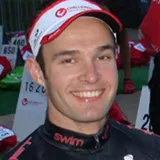
Dr Steve Faulkner has been working in the field of exercise physiology for more than 10 years, with a particular interest in the physiological factors that limit exercise performance. He has worked closely with Les Mills studying the effects of head dissipation during RPM™ indoor cycling classes. He is a member of the Physiological Society, European College of Sports Science and the American College of Sports Medicine, and in his spare time, a competitive triathlete.
Dr Faulkner recently teamed up with the BCC production Trust Me, I’m a Doctor to explore whether getting hot and sweaty – without doing any actual exercise – can provide some of the other benefits of exercise. You can find out more here.
Sign up to Fit Planet and get fresh health and fitness news and advice straight to your inbox. Subscribe

Fit Planet
Period power: How to start cycle syncing exercise

Fit Planet
How to unlock your push-up potential (and why it's worthwhile)

Fit Planet
Research roundup: the true power of intensity revealed

Fit Planet
Food trends: What’s set to change about how we fuel our bodies?



Fit Planet
Weight loss jabs: The side effect nobody’s talking about. And how to avoid it

Fit Planet
How to inspire fitness without saying a single naggy word


Fit Planet
Habit-forming advice and resolution myth-busting

Fit Planet