DEADLIFT BASICS
This strength-building staple is one of the most potent ways to improve strength, power and athleticism. But reaping all the benefits relies on solid deadlift technique – and there are some common mistakes to avoid.
Read on and you’ll discover:
- Why deadlifts are important for strength-building and athleticism
- How to master the perfect deadlift form
- The elbow secret that makes a deadlift more effective
- The most common deadlift mistakes to avoid
What is a deadlift?
The deadlift is one of three fundamental resistance training exercises, alongside the squat and bench press. Deadlifts are a functional strength movement, engaging a lot of large muscle groups and training your body in a way that aligns with day-to-day activities – in this case building the strength to safely lift things from the floor.
Deadlift muscles worked
During the deadlift you build integrated back and leg strength by working all the muscles of the posterior chain in unison. This means that all the muscles down the back of your body are engaged; the hamstrings, gluteus maximus, the erector spinae in the lower back, the scapula retractors and extensors in the middle and upper back; and the big latissimus dorsi muscles. You also build core strength and improve posture by engaging the abdominals.
While there are different ways to deadlift (you can start standing upright and lower the bar to your knees, start with the bar on a rack and lift it up until you are standing upright, or even start with the bar on the ground), they all involve working all of the muscles of the posterior chain in unison. That means there’s hamstring involvement, the glutes are engaged, and you’re working the lower back muscles and the thoracic extensors too.
The benefits of deadlifts
This power-packed exercise is great for strengthening all the muscles down the back of your body, building core strength and improving posture. It can also work wonders for athleticism, as building strong posterior muscles is key to helping you move faster during explosive movements. Like any strength training, deadlifts can also contribute to improved bone health and improved heart health, and they can help you to sleep better and live longer.
HOW TO DEADLIFT: PROPER DEADLIFT FORM
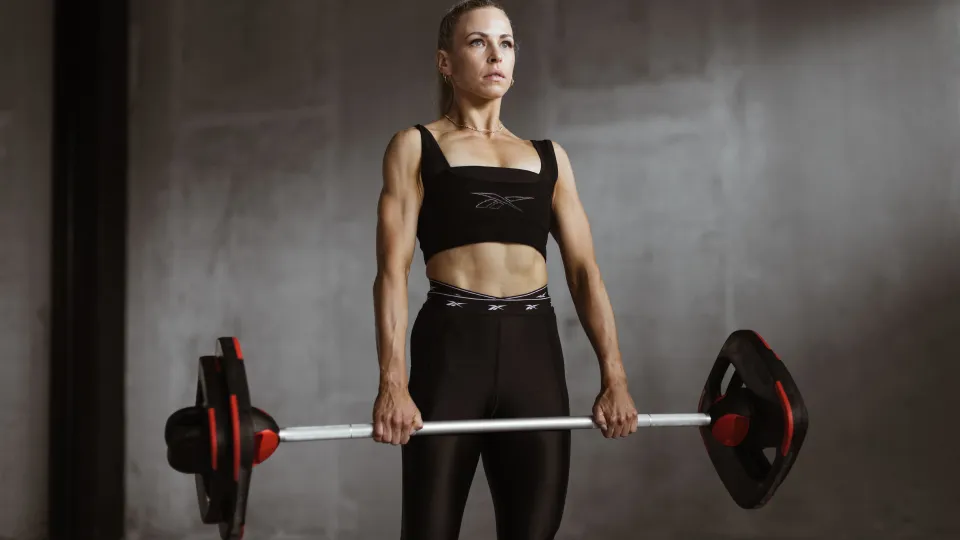
- Place your feet directly under your hips
- Keep your knees bent at a 20-degree angle
- Roll your shoulders up, back and down – so that you pick the chest up and set great posture
- Hold the bar with your hands a thumb distance out from the side of your thighs
- Brace your core to support your lower back
- Tip from the hip, sliding the bar down close to your thighs until it reaches the top of the knee
- As you lean forward, maintain a long spine and a slight knee bend
- Return to standing tall by driving through your heels and squeezing the glutes
- Keep the chest lifted by pulling your shoulder blades together and elbows back
- Keep your core braced and your chin tucked
- You should be looking at a spot about 2 meters (just over 6 feet) ahead of you on the floor at the bottom of the movement
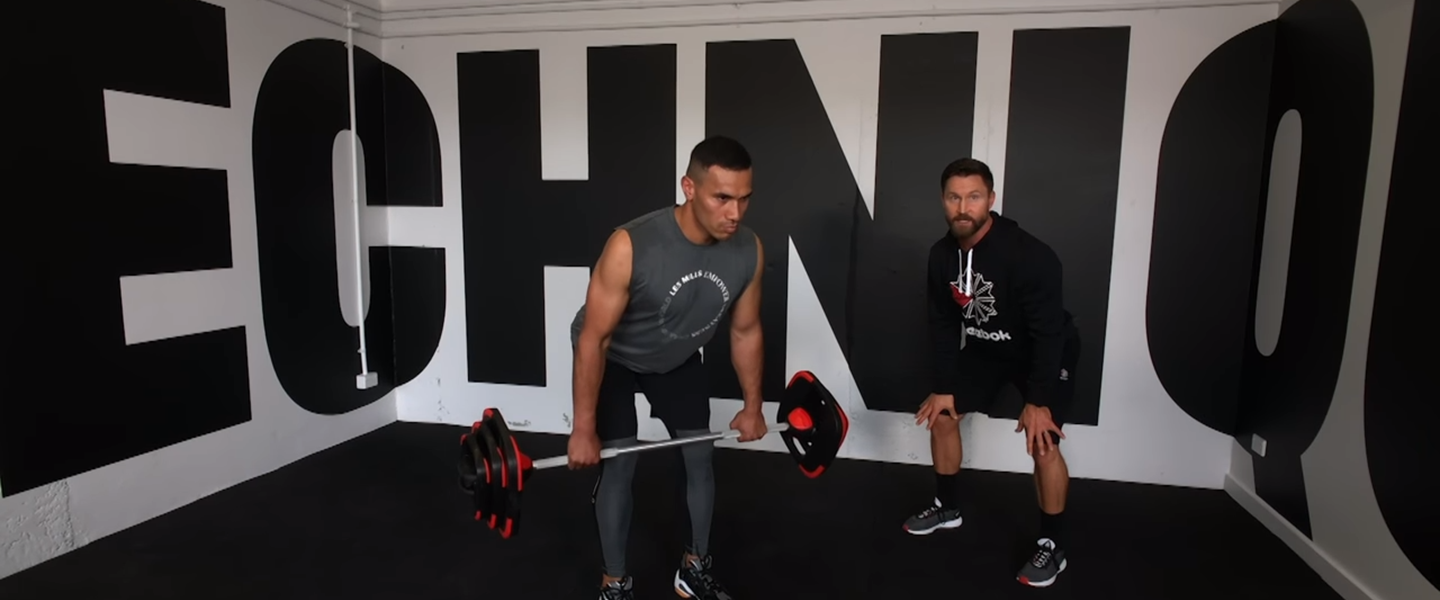
CHECK YOUR DEADLIFT FORM
As you lower the bar you should feel a stretch in the back of your thighs, and as you rise tall you should feel tension in the back of your thighs and your glutes. Throughout the movement, you should feel constant postural control through all regions of the back.
How to make deadlifts more effective
Most of the time your thoracic spine, which is the upper and middle area of your back, is naturally flexed, so to get the best results from your deadlifts you really need to focus on activating the thoracic extensors and scapula retractors (rhomboids and mid trapezius).
The easiest way to ensure you engage this important part of the posterior chain is to turn your elbows to the rear and keep them there as you complete your deadlifts.
You’ll notice that as soon as you turn your elbows to the rear, you get a little chest lift. This brings your shoulder blades back in towards your spine, you contract your scapular retractor muscles, and the muscles of your thoracic spine come into play. If you hold that activation as you complete the deadlift, you activate all the muscles that extend and stabilize your thoracic spine – and it makes your deadlift much more effective.
Exercises to improve deadlifts
The key component of a deadlift is the hip hinge action. Practicing this without weight helps to improve trunk stability and isolate movement to the hip joint.
Simply stand side on to a mirror, knees bent, arms crossed in front of the chest – lift the chest to activate the extensors and tip forward ensuring there is no give occurring in the spine and all the movement is isolated to the hip. Remember to keep your chin tucked as your trunk inclines forward.
BEGINNER DEADLIFT MISTAKES TO AVOID
- Losing neutral neck alignment by gazing forward at the bottom of the movement. This results in hyperextension of your neck and compression of the cervical vertebrae which, when combined with a heavy deadlift load, can result in a neck injury. You can alleviate the risk by keeping your chin tucked in and your eye gaze towards the floor.
- Rounding your upper back with your shoulders forward. This issue doesn’t just arise during deadlifts, a lot of us suffer from this alignment on a day-to-day basis! By focusing on keeping the shoulder blades towards the spine and the chest lifted, you will strengthen the key stabilizers of the thoracic region.
- Lowering the bar below the knees. Lowering the bar too low increases the chance of flexing the lumbar spine, and lumbar flexion with a heavy bar increases intervertebral disc stress. It is safest to lower the bar to the top of your knees, particularly when starting out.
- Bending your knees. While it’s good to set up the move with a slight bend in your knees (about 20 degrees), bending your knees any further during the movement allows you to lower the bar without an emphasis on the hip hinge. This is not ideal, as a hip hinge is the best action to engage the muscles of the posterior chain.
- Having the bar away from your thighs. Allowing the bar to move away from your thighs may put too much stress on the spinal extensors, which can result in an inability to maintain a neutral spine.
You can improve your deadlift performance by learning how to effectively breathe through the movement. Maximizing the benefits of deadlifts also relies on constant challenge and that means progressively increasing the weight you lift. This checklist provides guidelines on when to increase your load.
If you’re keen to practice your deadlift technique, you’re sure to get a good dose of deadlifts in any BODYPUMP or LES MILLS GRIT Strength workout. You can find a class or work out at home with LES MILLS+.
Sign up to Fit Planet and get fresh health and fitness news and advice straight to your inbox. Subscribe

Fit Planet
Exercise for mental health: What the research says about feeling happier, healthier, and more resilient
Fit Planet
How to become a group fitness Instructor: A step-by-step guide

Fit Planet
Why music makes exercise feel easier, more enjoyable, and more effective
Fit Planet
Are you eating enough to support your workouts? 7 signs you're under-fueling your training
Fit Planet
10 signs you'd make a great group fitness Instructor
Fit Planet
Does exercise help you lose weight? What the science really says
Fit Planet
How much strength training do you need to live longer? Scientists say 90-120 minutes per week
Fit Planet
Should you change your workouts based on your menstrual cycle?
Fit Planet
When is the best time to exercise? Morning vs evening workouts explained
Fit Planet
What is CEREMONY HYROX? A complete guide to the new Les Mills x HYROX workouts
Fit Planet